
Search Columbus County Court Records
The main public search system for Columbus County court records is the North Carolina eCourts Portal. The Portal includes Smart Search for case information, Search Hearings for hearing dates, Make Payments for eligible citations and court costs, and NC Judgment Search for judgment indexes. Columbus County's official Judicial Branch page links users to those tools for finding court dates and searching by name, citation number, county, and related criteria.
Online records are not the whole file. NCAOC states that actual case files are viewed by visiting the clerk in the county where the case is located, and clerk staff can provide copies for a fee. Background-check users are directed to the county clerk's office rather than relying only on Portal. Older files, certified copies, divorce judgments, and complete file review may require the Columbus County Clerk of Superior Court.
- Open the North Carolina eCourts Portal.
- Use Smart Search for a record number or a party name in last, first format.
- Use Advanced Filtering Options to narrow by Columbus County, case type, status, file date, or party search type.
- Use Search Hearings when the goal is a court date, hearing type, courtroom, judge, attorney, party, or case number.
- Contact the Columbus County Clerk of Superior Court for complete files, certified copies, and record questions that Portal cannot answer.
| Portal field | Use | Format note |
|---|---|---|
| Record Number or Name | Primary Smart Search field | Case number or Last, First Middle Suffix |
| Filter by Location | Limit results to Columbus County | All North Carolina counties appear as options |
| File Date Start / End | Narrow filing window | Date fields in advanced filters |
| Search Hearings Location | Find hearing calendars | Select Columbus County when available |
| Search Type | Party, business, attorney, case, judge, or courtroom | Changes the search criteria field |
The NCAOC Columbus County landing page is the county-level hub for eCourts links, local calendars, payment information, jury service, and courthouse resources.
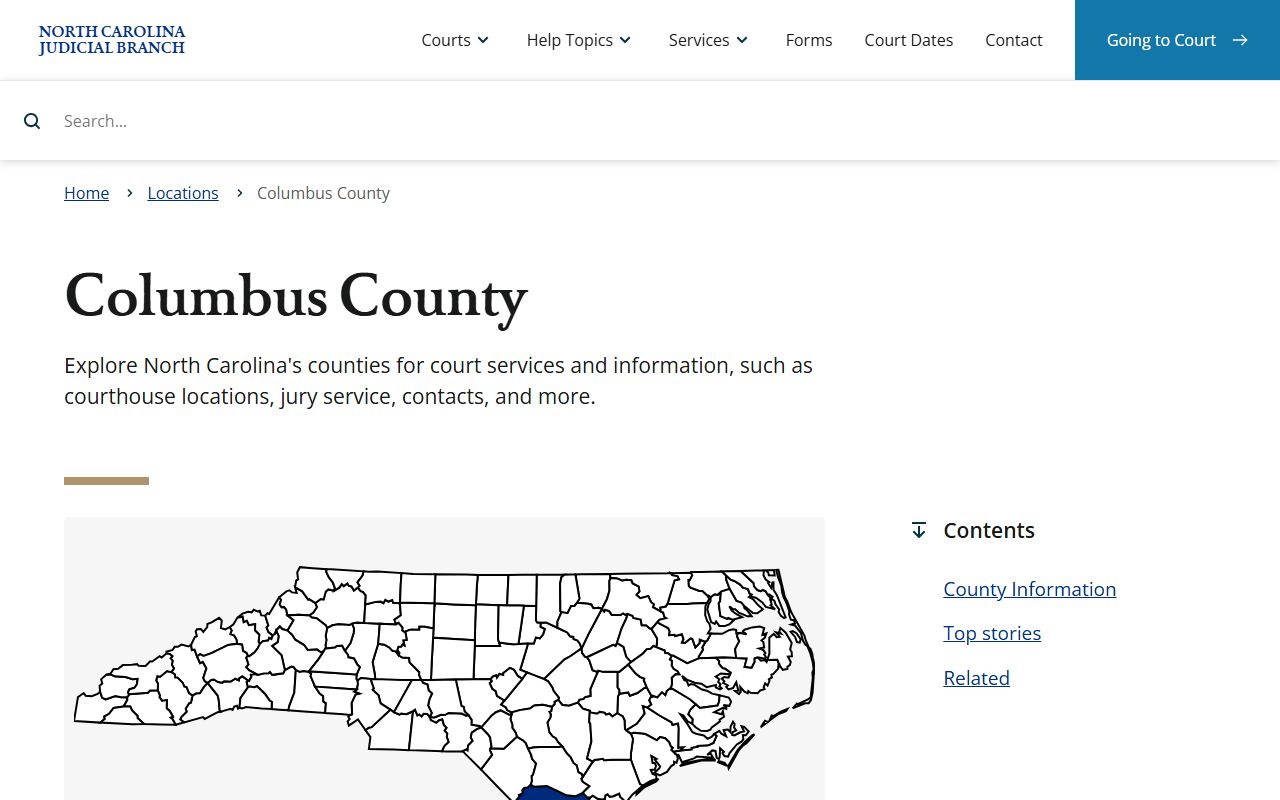
That county landing page is the best official starting point when a search needs both online Portal access and local courthouse context.
Columbus County Courthouse Records
The main courthouse for Columbus County Court users is the Columbus County Courthouse at 100 Courthouse Circle in Whiteville. The official mailing address is PO Box 1587, Whiteville, NC 28472, and the main telephone number is (910) 641-4400. NCAOC lists weekday hours as 8:30 a.m. to 5:00 p.m. and states that the Clerk's Office is located in this building.
Columbus County also has nearby annex facilities. The Courthouse Annex Building at 113 Courthouse Square houses the Public Defender's Office and three courtrooms. The Dempsey B. Herring Courthouse Annex is at 112 W Smith Street, with main phone (910) 641-3000 and weekday hours listed by NCAOC. Court users should check summonses, hearing notices, Search Hearings results, or local calendar notes before assuming a courtroom is in the main building.
Columbus County Courthouse
100 Courthouse Circle
Whiteville, NC 28472
(910) 641-4400
NCAOC courthouse details
Dempsey B. Herring Courthouse Annex
112 W Smith Street
Whiteville, NC 28472
(910) 641-3000
NCAOC annex details
Courthouse Annex Building
113 Courthouse Square
Whiteville, NC 28472
Public Defender's Office and three courtrooms
The official courthouse page lists Columbus County Courthouse address, hours, facilities, mailing address, and clerk location.
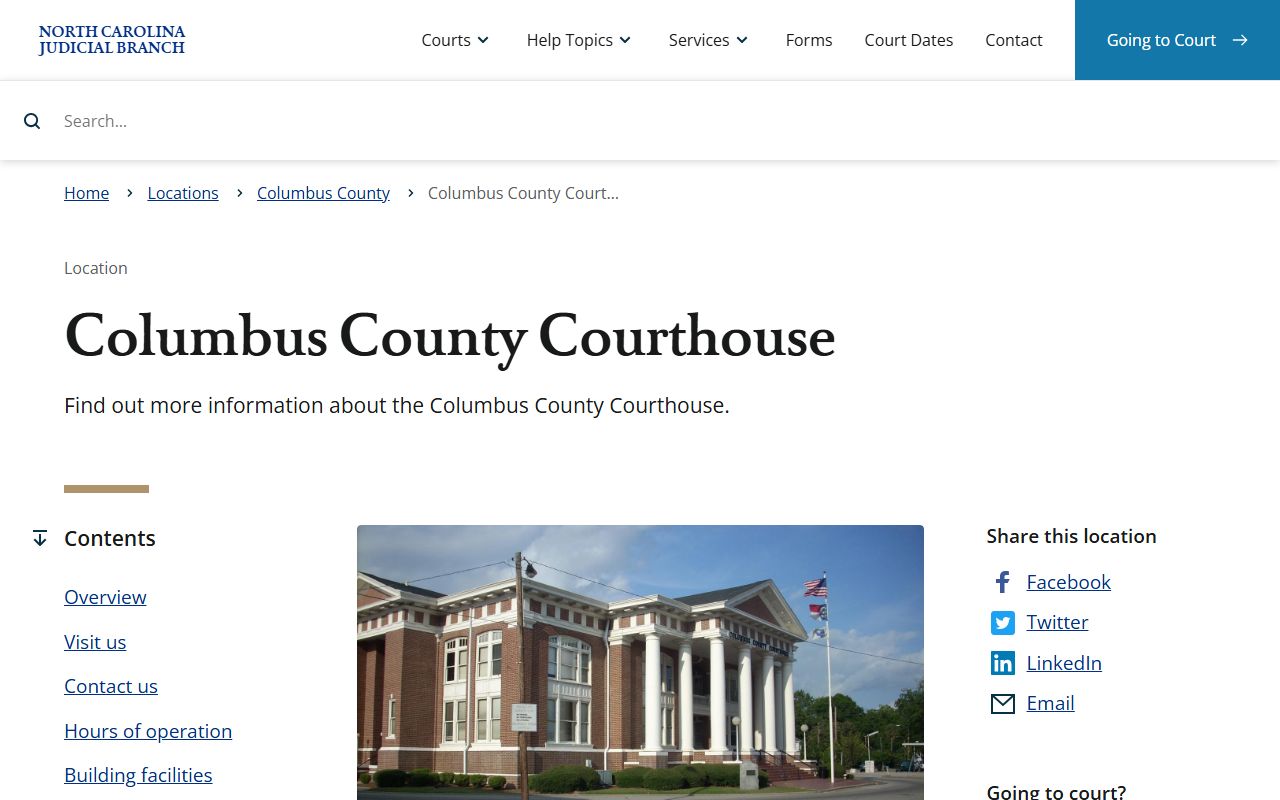
Use the courthouse page for present visitor logistics, especially when a record request requires in-person file review or certified copies.
The Dempsey B. Herring Courthouse Annex page gives the annex address and hours for nearby court operations.
The annex listing matters for hearings because not every Columbus County courtroom function is housed inside the main courthouse.
Columbus County Court System
Columbus County is part of North Carolina's General Court of Justice. The local trial level includes Superior Court and District Court divisions. NCAOC identifies Columbus County as Prosecutorial District 15, Superior Court District 15A, and District Court District 15. The Clerk of Superior Court maintains the official court records for both Superior Court and District Court filings in the county.
| Court or level | Role in Columbus County | Common records |
|---|---|---|
| District Court | Misdemeanors, infractions, traffic, domestic, juvenile, small claims appeals, and lower-dollar civil cases | Citations, hearing entries, orders, judgments, dispositions |
| Superior Court | Felonies, major civil cases, District Court appeals, and estate caveats | Indictments, felony files, civil orders, trial judgments |
| Magistrates | Initial appearances, warrants/process, and small claims functions | Process, first appearance, warrant, and small-claims related entries |
| Appellate Courts | North Carolina Court of Appeals and Supreme Court | Appeals, opinions, orders, appellate dockets |
State case path: District Court or Superior Court › North Carolina Court of Appeals › Supreme Court of North Carolina when review is available.
Columbus County Court Record Types
Columbus County court records include civil, criminal, family, traffic, small claims, probate, special proceeding, juvenile, protective order, and judgment records. Each record type has its own access limits. Public case information may appear in Portal, but the full file and certified copies route to the Clerk of Superior Court. Vital records and deed records route to the Register of Deeds instead of the clerk.
- Civil records: complaints, answers, motions, orders, judgments, liens, foreclosures, partitions, and other civil filings.
- Criminal records: charges, appearances, pleas, dispositions, sentences, court costs, attorneys, and hearings.
- Traffic records: citations, waivers, court dates, fines, costs, failures to appear, and payment status.
- Estate records: wills, applications, letters, inventories, accountings, creditor notices, and clerk orders.
- Judgments: NC Judgment Search indexes judgment data and routes full summaries back to Smart Search.
Juvenile records, sealed records, expunged records, adoption matters, protected personal identifiers, and some family or mental-health material are not treated as ordinary public case files.
Columbus County Court Record Fields
A Columbus County court record can show the case number, filing date, court location, parties, attorneys, judicial officer, courtroom, hearing dates, charges or claim type, disposition, sentence, judgment comments, financial obligations, and redaction notes. Search results are best read as an index or case summary unless the clerk provides the complete file.
| Field | What it shows |
|---|---|
| Case or record number | The court's tracking number, useful for Smart Search, payments, and clerk copy requests. |
| Parties | Names of plaintiffs, defendants, petitioners, respondents, businesses, or criminal defendants. |
| Filing dates | When the case or filing entered the court system. |
| Hearing details | Location, hearing type, courtroom, judicial officer, and scheduled date where available. |
| Disposition or judgment | The outcome, index date, status, comments, sentence, or enforceable decision. |
| Financial data | Eligible fines, costs, restitution, attorney fees, probation or parole fees, and payment status. |
- Docket
- A chronological list of case filings, hearings, and events.
- Disposition
- The final outcome of a charge or case.
- Judgment
- A final or enforceable court decision that may create a lien or obligation.
- Expunction
- A court process that clears eligible public criminal records.
Columbus County Public Access Laws
North Carolina public access starts with Chapter 132, but court records also depend on court-specific statutes, sealing orders, expunction law, and juvenile confidentiality rules. For Columbus County Court records, the practical route is Portal for searchable case information, the Clerk of Superior Court for complete files and certified copies, the Register of Deeds for vital and real estate records, and law enforcement for police reports.
Key statutes:
G.S. 132-1 defines public records broadly for North Carolina agencies and subdivisions.
Chapter 132 treats returned warrants, indictments, criminal summonses, and related returned process as public court records unless sealed.
G.S. 7A-109 governs clerk record-keeping and supports electronic court-record procedures.
G.S. 7B-3000 keeps juvenile court records under special access rules.
Columbus County Sheriff Records
The Columbus County Sheriff's Office is at 817 Washington Street in Whiteville. The main phone is (910) 642-6551, and the office lists Sheriff W. Rogers in the research sources. The sheriff's official site provides court services, detention information, an In Custody route, contacts for local police departments, and a mobile app that advertises inmate search, sex offenders, Most Wanted, tips, emergency alerts, local weather, and social media features.
Sheriff and jail records are not the same as Columbus County Court case files. A person arrested in Columbus County may appear in custody information before the full court case reflects every hearing, plea, disposition, or sentence. The court case record is searched through NCAOC systems and handled by the Clerk of Superior Court as the prosecution proceeds.
The Columbus County court contact directory lists clerk, judge, district attorney, Guardian ad Litem, magistrate, courthouse, and annex numbers.
The directory is useful when a Portal result needs a clerk, judge's office, magistrate, or district attorney contact rather than a sheriff contact.
Columbus County Court Payments
Columbus County payment rules are specific. For mail payments on eligible court or traffic matters, use a money order or certified check only, make it payable to Columbus County Clerk of Superior Court, and include the citation number for eligible traffic citations. Do not mail cash or personal checks. In-person payments can be made at the Cashier's Window in the Criminal Division on the first floor of the courthouse with accepted payment types listed by NCAOC.
| Payment route | Accepted details from research |
|---|---|
| Money order or certified check only; no cash and no personal checks. | |
| In person | Cash, credit/debit card with processing fees, money order, or certified check. |
| Online | Eligible payments through NCAOC Portal; Visa, MasterCard, and Discover listed, not Apple Pay or Cash App. |
The local court and traffic payment page gives Columbus County payment rules for traffic and court fees.
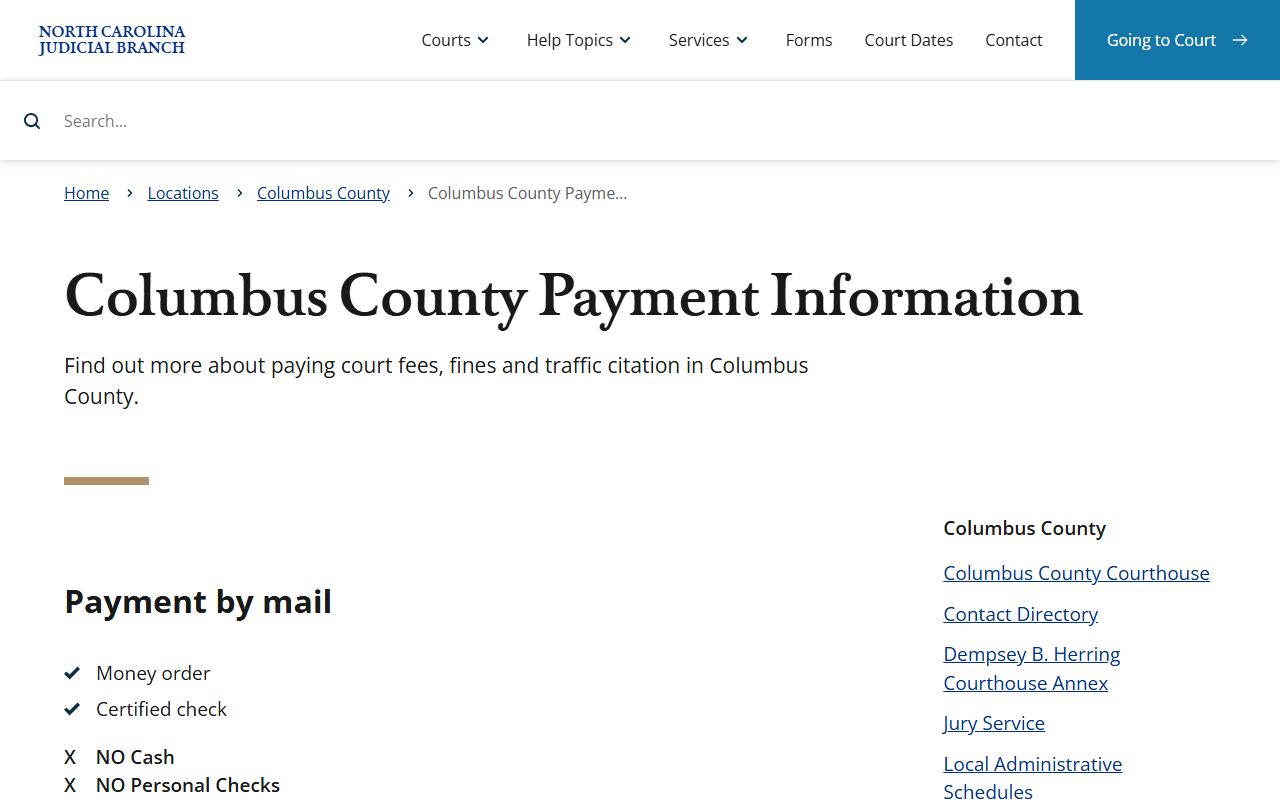
Payment information should be checked before mailing anything because the court rejects payment types that official instructions do not accept.
Columbus County Court Dockets
Court dates and docket information are separate from full case records. Search Hearings can find current court calendars by case number, party name, business name, attorney name, attorney bar number, judicial officer, or courtroom. Columbus County also links local civil and criminal calendars and administrative schedules through the NCAOC county page.
The local administrative schedules page links civil and criminal calendars and docket management schedules for Columbus County.
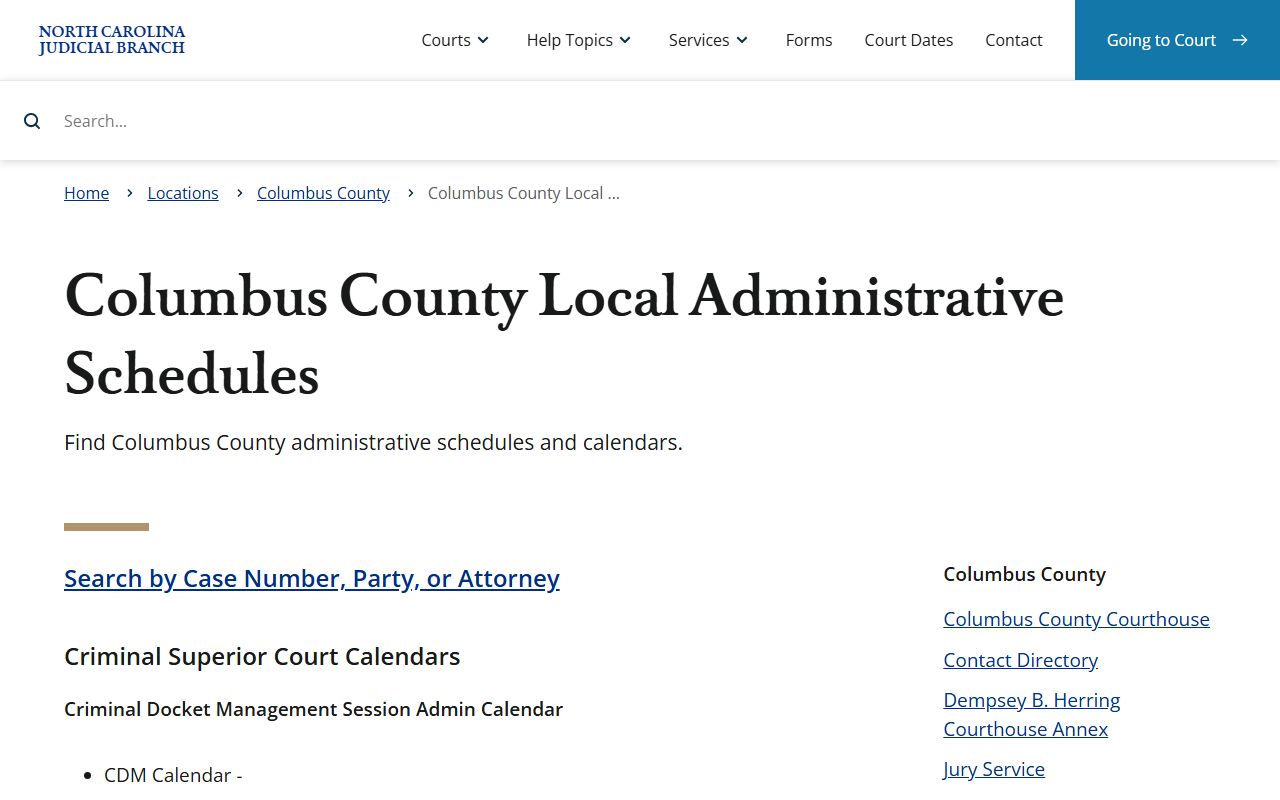
Use administrative schedules for local calendar context, then confirm case-specific details through Search Hearings or the clerk if the date is critical.
Columbus County Probate and Vital Records
Marriage licenses and marriage records are Register of Deeds records. NCARD lists Columbus County Register of Deeds Kandance H. Bullock at 125 Washington Street, Suite B, Whiteville, with phone 910.640.6625. Divorce judgments are different; they are obtained from the Clerk of Superior Court in the county where the divorce was granted. Divorce case information may appear in Smart Search if public and not restricted.
Probate records route to the Clerk of Superior Court acting as probate judge. Estate records may include wills, applications, letters, inventories, accountings, creditor notices, guardianship filings, and special proceedings. Searchable information can begin in Portal or public terminals, but full files and certified copies route to the clerk.
Visit Columbus County Court
Visitors should use the physical courthouse address for navigation rather than the clerk's mailing address. Accessibility features listed by the courthouse page include electric doors, a wheelchair ramp, and elevators. The sheriff's Court Services page describes front-door screening with a metal detector, bag or briefcase inspection, plastic containers for metal items, and possible handheld scanning or x-ray inspection if the walk-through detector alarms.
Jury service has its own route. Columbus jurors typically serve a one-week session and may serve on more than one trial. Jurors usually report to the superior courtroom on the second floor, but the summons jury line controls exact reporting instructions. Excusal, deferral, exemption, and disqualification requests must be submitted electronically or by mail at least ten days before service and cannot be handled by telephone.
The Columbus County jury service page gives local jury reporting and excusal information.
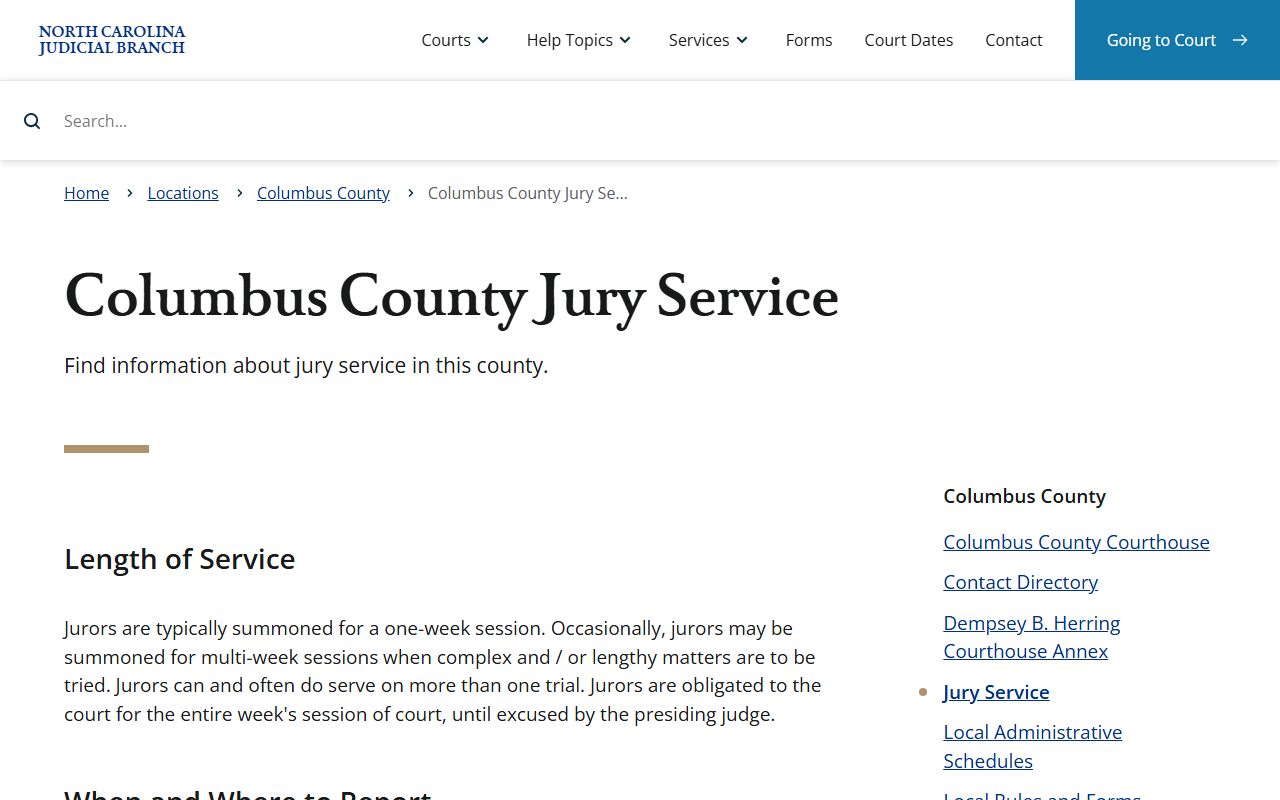
Jury rules are separate from public record searches, but they affect courthouse arrival, timing, and which office can answer questions.
Columbus County Court History
Columbus County was formed in 1808 from Bladen and Brunswick counties. NCpedia identifies the county seat as Whiteville and notes that Whiteville was incorporated in 1832 and named for James B. White, who donated land for the county courthouse in 1808. That history explains why current court, sheriff, Register of Deeds, and county government offices remain clustered in Whiteville.
The NCpedia Columbus County overview provides county formation and local history details.
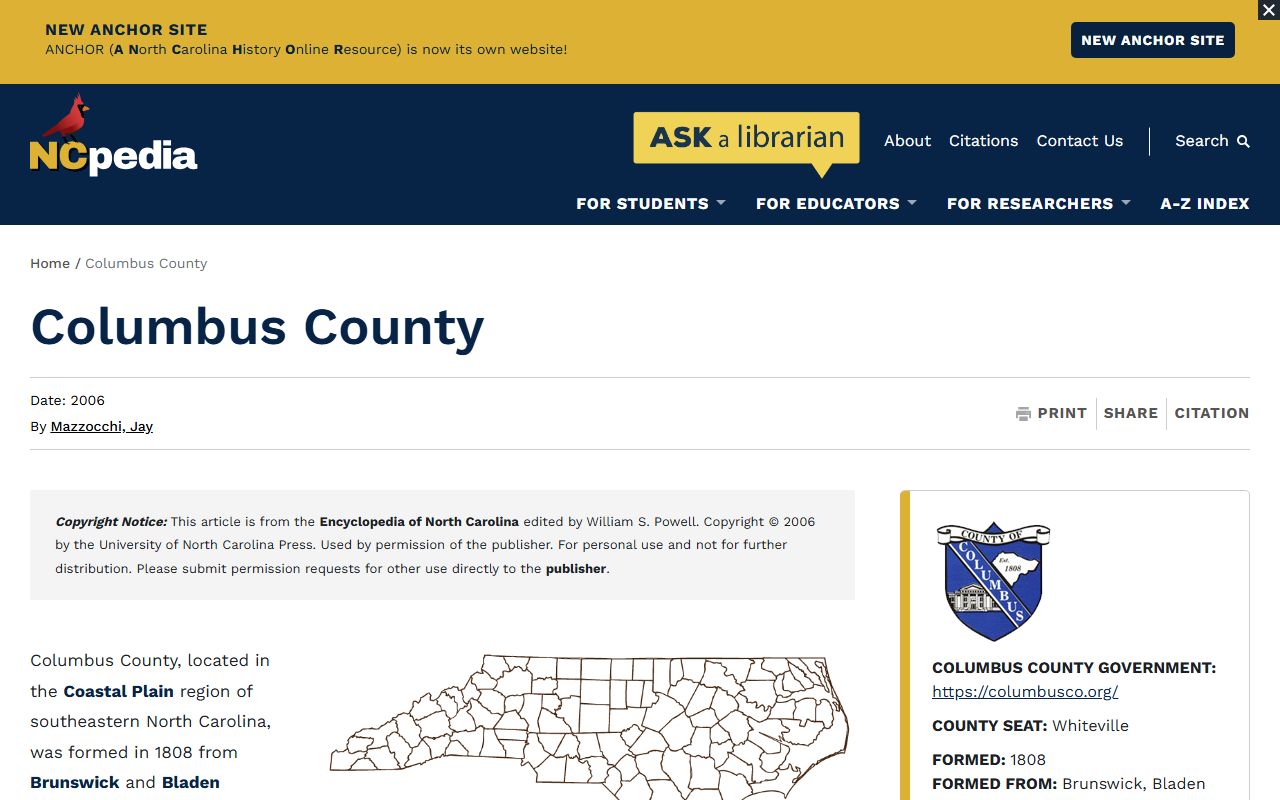
Historic context should not replace current court instructions, but it helps explain the long-running courthouse focus in Whiteville.
The Whiteville county-seat background supports the courthouse-city context for Columbus County Court records.
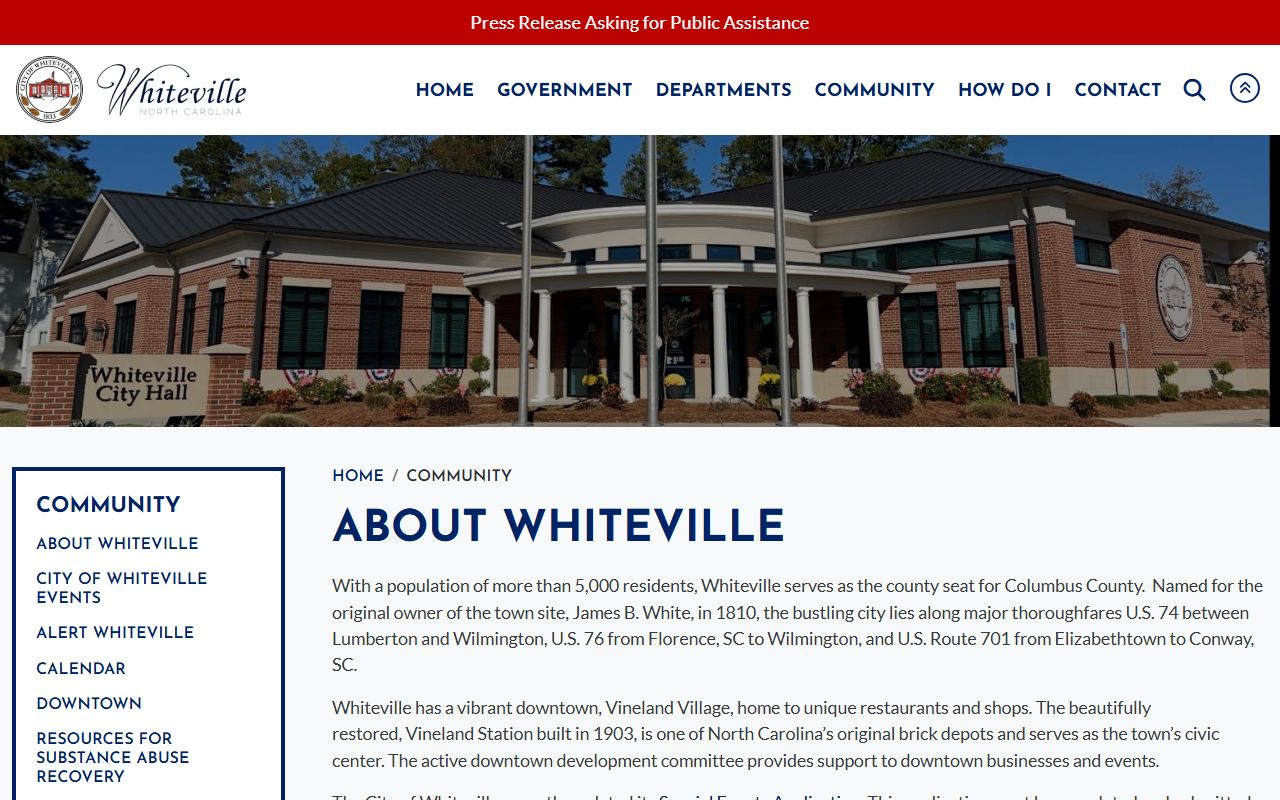
Whiteville remains the practical destination for most in-person Columbus County court record tasks.
Columbus County Court FAQ
Can Columbus County Court records be searched online?
Yes. Use the North Carolina eCourts Portal for Smart Search, Search Hearings, Make Payments, and NC Judgment Search. Complete files, certified copies, background-check use, and older or non-digitized records may still require the Clerk of Superior Court.
Who keeps Columbus County court files?
The Columbus County Clerk of Superior Court keeps Superior Court and District Court records. The office is located at the Columbus County Courthouse in Whiteville and also acts as probate judge for estate matters.
Where are marriage records kept?
Marriage licenses and many vital records are handled by the Columbus County Register of Deeds, not the Clerk of Superior Court. Divorce judgments come from the clerk where the divorce was granted.
Is there a public active warrant database?
The research did not locate an official Columbus County web page with a searchable active-warrant list. Warrant-related public court records may appear after return or case filing, while sheriff, magistrate, and clerk channels are the practical fallback routes.