
Search Columbus County Traffic Citations
Most Columbus County traffic court records begin with a citation number, a case number, a party name, or a driver's license search. The statewide NCAOC Make Payments tool is the payment lookup channel for eligible traffic citations, criminal fees, costs, restitution, probation and parole fees, and related court obligations. The same North Carolina eCourts system also has Smart Search and Search Hearings for case status and court dates. Columbus County was added to eCourts in the coastal Track 7 rollout, so local traffic users now rely on the state Portal rather than a separate county ticket database.
The quickest search is usually the citation number printed on the ticket. If that does not return a match, search by case number, party name, business name, or driver's license fields. A payment search is not the same as a full case-file search. For a complete Columbus County traffic court record, certified copy, older file, or file image that is not public online, contact the Columbus County Clerk of Superior Court.
The Make Payments source screen shows the traffic payment path used for eligible Columbus County citations.
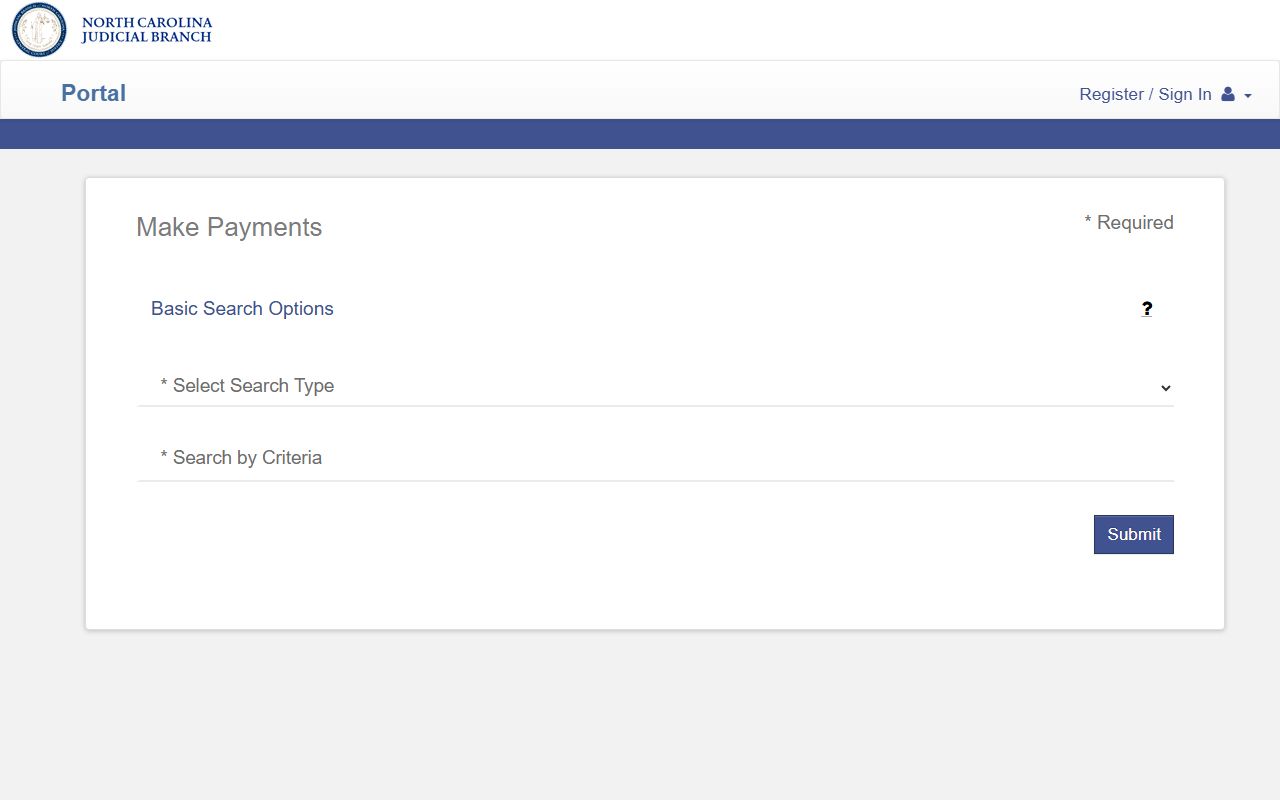
Use the payment screen for waiver-eligible obligations, then use hearing search or the clerk when the matter needs a court appearance, copy, or case review.
| Field Label | Type | Required | Options / Format Notes |
|---|---|---|---|
| Select Search Type | Dropdown | Yes | Citation Number, Case Number, Party Name, Business Name, or Driver's License. |
| Case Number | Text | Conditional | Example format shown in research: 15CR123456-910. |
| Citation Number | Text | Conditional | Example shown in research: J121412. |
| Business Name | Text | Conditional | Includes a Sounds Like option. |
| Last Name / First Name | Text | Conditional | Used for party-name searches. |
| Date of Birth | Date | Conditional | Use mm/dd/yyyy when the search type requires it. |
| State and Driver's License Number | Dropdown / text | Conditional | Used with driver's license searches. |
Columbus County Traffic Court Venue
Traffic cases in Columbus County are generally North Carolina District Court matters. North Carolina does not use county justice-of-the-peace courts or county courts-at-law for Columbus traffic tickets. Municipal police agencies may issue citations in Chadbourn, Fair Bluff, Lake Waccamaw, Tabor City, or Whiteville, but the court case routes into the state court system and the Columbus County Clerk of Superior Court. Serious traffic-related crimes, appeals, or offense types that move beyond routine infraction handling may involve Superior Court or a criminal case file.
Columbus County court users should match the citation, hearing notice, or Portal result to the correct building before arriving. The official Columbus County contact directory lists the clerk, judges, magistrates, District Attorney, courthouse, and annex numbers. The main courthouse is the primary clerk location, while nearby annex buildings may hold courtrooms or public defense offices.
| Court or Office | Traffic Record Role | Address / Phone |
|---|---|---|
| District Court, District 15 | Routine infractions, misdemeanors, traffic hearings, and waiver matters. | Columbus County Courthouse, 100 Courthouse Circle, Whiteville, NC 28472; (910) 641-4400. |
| Clerk of Superior Court | Traffic case files, copies, payments, cashier route, and public terminals. | 100 Courthouse Circle, Whiteville, NC 28472; (910) 641-4400. |
| Magistrates | Initial process and court-related matters connected to some charges. | Contact directory lists (910) 641-4519. |
| Municipal police agencies | May issue citations or hold crash and incident reports, but court cases route to NCAOC. | Agency contacts are listed by the Columbus County Sheriff's Office. |
Pay or Contest Columbus County Tickets
The Columbus County payment information page gives local payment rules for court fees, fines, and traffic citations. By mail, payment must be a money order or certified check, not cash or a personal check, payable to Columbus County Clerk of Superior Court. The citation number must be included, and the payment is mailed to the clerk at the courthouse mailing address. In person, accepted payment methods include cash, credit or debit card with processing fees, money order, or certified check. Personal checks are not accepted.
The cashier route is local and specific: in-person payments go to the Cashier's Window in the Criminal Division on the first floor of the Columbus County Courthouse. Online payments use NCAOC services when the case is eligible. The Portal notice says Visa, MasterCard, and Discover are accepted, while Apple Pay, Google Pay, Cash App, and Venmo are not accepted. A person contesting a traffic citation should confirm the court date through Portal or Search Hearings and appear or follow court instructions rather than treating payment as a dispute.
The local payment source is the official place to confirm Columbus County mail, in-person, and online traffic payment rules.
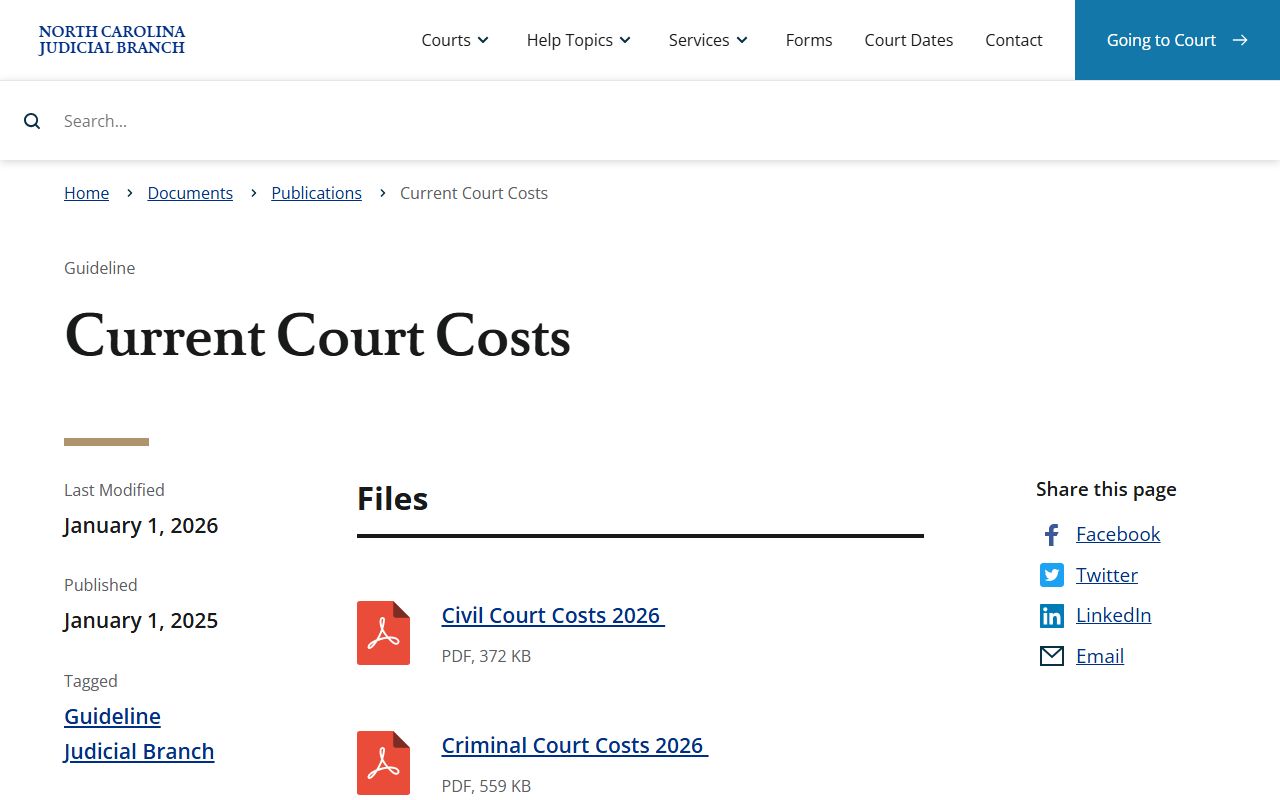
Costs can change through statewide court-cost updates, so a citation search and the clerk's cashier route control the amount due in a specific Columbus County traffic record.
- Read the citation for court date, waiver eligibility, citation number, and charging agency.
- Search Make Payments by citation number first, then try case number, party name, business name, or driver's license fields if needed.
- If the citation is waiver-eligible and payment is the chosen route, pay online, by mail, or in person under Columbus County payment rules.
- If contesting the citation, check Search Hearings or Portal and appear as directed, or consult counsel before the court date.
- For missed court, failure to pay, or copy issues, contact the Clerk of Superior Court rather than relying on a payment receipt alone.
What Columbus County Traffic Records Show
A Columbus County traffic court record can show more than the amount due. It may identify the citation number, charging agency, court case number if one was created, charge or infraction, hearing date, waiver status, disposition, fine, costs, and failure-to-appear or failure-to-pay status. If a traffic matter becomes a criminal case, the record may also show bond, plea, attorney, judgment, sentence, or probation terms. Full criminal traffic matters, such as impaired-driving cases, belong with the full court file and may need review through the clerk or the criminal case search path.
Public Portal results should be read as case information, not as a certified court document. NCAOC states that complete file review and copies are handled by the clerk in the county where the case is located. For Columbus County traffic court records, that means the Clerk of Superior Court at the Columbus County Courthouse. For broader case context, traffic-related criminal outcomes may also appear in Columbus County criminal court records.
| Field | What It Shows |
|---|---|
| Citation number | The ticket identifier printed on the citation and used first in payment lookup. |
| Case number | The court case number if the traffic matter has become a court case record. |
| Charge or infraction | The alleged traffic violation or traffic-related criminal offense. |
| Court date | The hearing or appearance date found through Portal or Search Hearings. |
| Disposition | The result, such as paid, waived, dismissed, responsible, guilty, or another court outcome when entered. |
| Financial data | Fines, costs, fees, restitution, or other eligible payment obligations. |
| FTA or payment status | Failure-to-appear or failure-to-pay entries that can create more court or licensing problems. |
Columbus County Traffic Waivers
The state traffic violations help topic explains that some citations may be waived online, in person, or by mail. Waiver means the person gives up the right to a court hearing and pays the required amount when the citation is eligible. If waiving in person, NCAOC says the waiver is signed before a clerk or magistrate. If waiving online, payment is by credit or debit card through the court service.
The traffic violations source describes waiver and contest options for North Carolina citations, including Columbus County traffic court records.
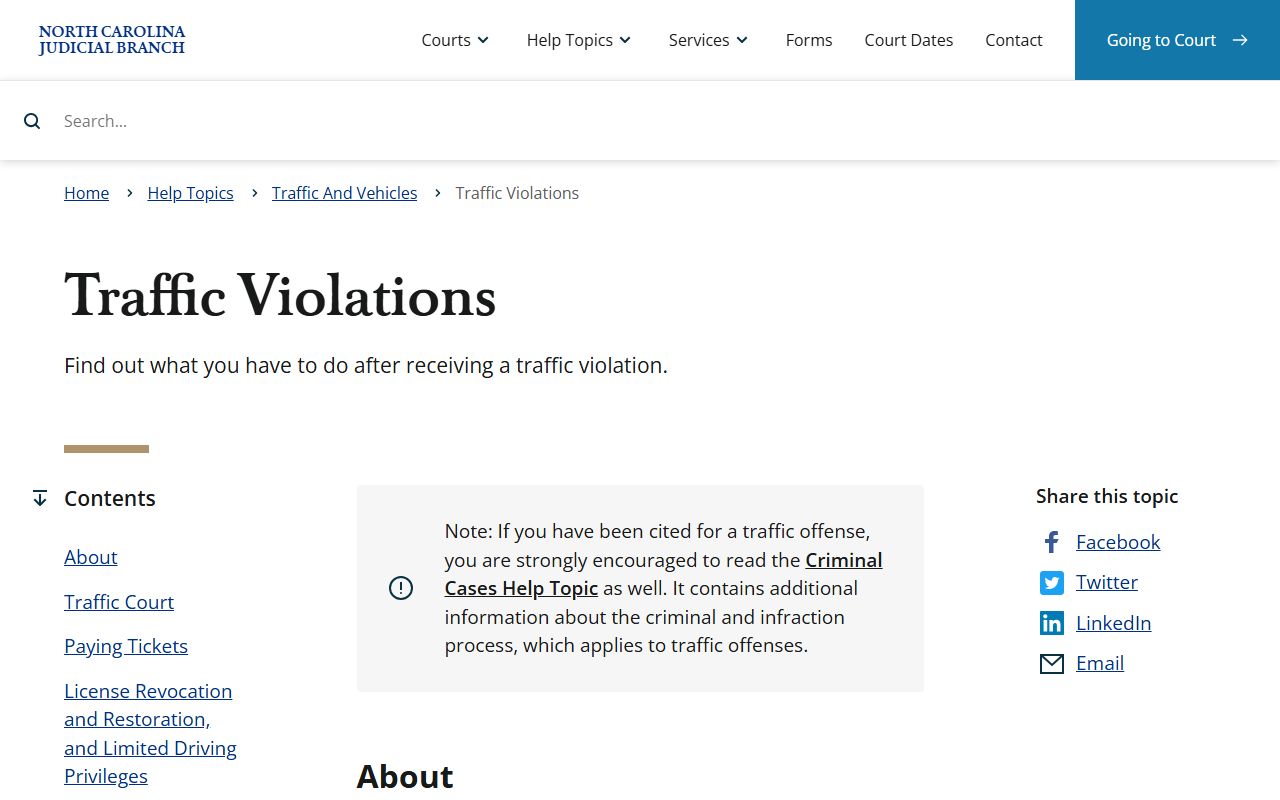
A waiver may close the court payment side, but it is not the same as correcting a driver record or avoiding all licensing consequences.
Note: If a citation is not found or does not show waiver eligibility, confirm the court date through Search Hearings or contact the clerk.
Traffic Court Records vs Driver Records
Columbus County traffic court records and state driver records are different files. The court record is created and maintained through the North Carolina court system. It shows the citation, court case, hearing, waiver, disposition, and money owed in the court matter. The driver record is a licensing record maintained outside the Columbus County Clerk of Superior Court. It can show license status, convictions reported to the Division of Motor Vehicles, points, suspensions, and driver-history entries.
The state traffic and vehicles topic separates court traffic information from driver-license consequences and related vehicle issues.
This distinction matters when a Columbus County ticket has been paid but a license, insurance, CDL, or out-of-state reporting issue remains open.
| Point of Comparison | Court Traffic Record | State Driver Record |
|---|---|---|
| Record source | North Carolina court system and Columbus County Clerk of Superior Court. | State licensing agency record, not the Columbus clerk's file. |
| What it shows | Citation, case number, charge, court date, disposition, costs, waiver, FTA status. | License status, convictions reported to DMV, points, suspensions, driver history. |
| Where to access | NCAOC Portal, Make Payments, Search Hearings, public terminal, clerk file review. | State driver-record process, not the Columbus County court payment page. |
| How to correct errors | Start with the clerk or the court case record if the court outcome is wrong. | Use the state driver-record correction route if the licensing record is wrong. |
Columbus County Traffic Fees
Traffic fees in Columbus County depend on the citation, case status, waiver eligibility, court costs, processing fees, and any added consequence from missed court or missed payment. The local payment page confirms payment channels and accepted payment types, while the statewide court-cost publication is the source for current cost schedules. The research did not locate a Columbus-specific plain-copy or certified-copy amount for traffic records, so copy amounts should be confirmed with the Clerk of Superior Court before ordering.
The court costs source and current-cost publication explain statewide court-cost routing for North Carolina court matters.
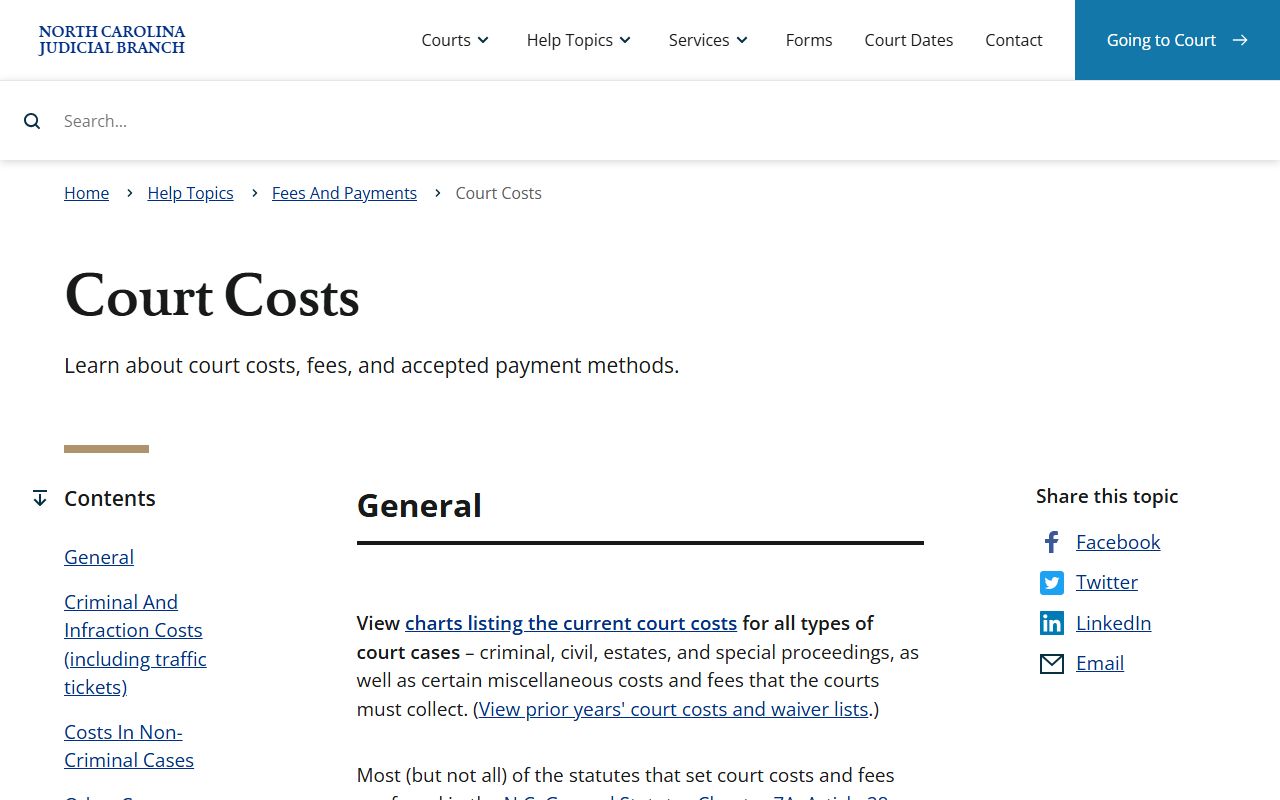
For a specific traffic citation, the payment lookup and Columbus County cashier route control the balance that must be paid.
| Item or Channel | Official Detail Located |
|---|---|
| Mail payment | Money order or certified check only; no cash or personal checks; include citation number. |
| In-person payment | Cash, credit/debit card with processing fees, money order, or certified check; no personal checks. |
| Online payment | Eligible matters use NCAOC services with credit/debit card and processing fees. |
| Accepted online cards | Portal notice lists Visa, MasterCard, and Discover; digital payment apps are not accepted. |
| Copies or certified records | Clerk staff can provide copies for a fee; a Columbus traffic-copy amount was not located in official captures. |
Columbus County Traffic Record Limits
CDL, out-of-state, impaired-driving, and crash-report issues need care because they may not be solved by a payment screen. The research did not locate Columbus-specific CDL rules in official pages, so CDL holders should treat a traffic ticket as both a court matter and a licensing issue. Paying or waiving a ticket can still affect a driver record, employer reporting, insurance, or home-state license status. Out-of-state drivers should not assume a Columbus County payment closes every consequence outside North Carolina.
Crash or accident reports are also separate. A collision report is usually requested from the investigating law enforcement agency or the state crash-report process, not from the court Portal, unless a related court case exists. Sealed, expunged, juvenile, or protected information also may not appear in public traffic court records. North Carolina expunction rules can apply to some dismissed, not-guilty, or eligible nonviolent matters, but eligibility turns on the exact charge and disposition.
Note: A traffic payment receipt proves payment activity; it is not a certified Columbus County traffic court record or a state driver record.