
Columbus County Criminal Court Records
A Columbus County criminal court record is the court case file kept once a charge is filed in the state trial court system. It can include the charging record, case number, defendant name, court division, hearing history, attorney information, plea, motions, trial events, disposition, sentence, fines, costs, restitution, and probation information. The Clerk of Superior Court maintains the court file, while the District Attorney prosecutes the case on behalf of the State.
North Carolina splits trial work between District Court and Superior Court. District Court handles misdemeanors, infractions, traffic matters, initial stages, and related lower-level criminal work. Superior Court handles felony criminal cases and certain appeals from District Court. Columbus County is listed by NCAOC as Prosecutorial District 15, Superior Court District 15A, and District Court District 15. For a closer look at the charge itself before final outcome, use the Columbus County arrest and court charge record route in court charge records.
The North Carolina District Court page is assigned to this criminal court records page.
District Court context matters because many Columbus County criminal court records begin there before a felony, appeal, or other issue moves into a different stage.
Search Columbus County Criminal Court Records
The online starting point is the North Carolina eCourts Portal. Smart Search is used for criminal case information by record number, case number, name, business name, or advanced filters. Search Hearings checks upcoming hearing dates. Make Payments can search eligible criminal, infraction, probation, parole, and citation obligations by citation number, case number, party, business, or driver's license. Full file review and certified copies still route through the Columbus County Clerk of Superior Court.
- Open Portal and choose Smart Search for the criminal court case file.
- Enter the case number if known, or search the defendant name in the Portal name format.
- Use Advanced Filtering Options to narrow the location to Columbus County and add case type, case status, or file date filters.
- Review the case summary, docket events, hearing information, charges, disposition, judgment, and financial entries that are visible.
- Contact the Clerk of Superior Court for certified copies, background-check use, older file review, or documents not shown in the public Portal view.
Portal is not a statewide criminal-history certificate. NCAOC says people doing background checks should use the county clerk's office rather than Portal. State prison, probation, and parole lookup is handled by the North Carolina Department of Adult Correction and does not replace a Columbus County criminal court file.
Columbus County Criminal Case Flow
A criminal court record grows as the case moves from an accusation into court events and an outcome. Some entries are brief, such as a hearing date or continuance. Others are more important, such as a plea, dismissal, verdict, judgment, sentence, or probation condition. The docket can show timing, but the full file gives the better record of what was filed and ordered.
Case flow: Charges Filed › Arraignment › Pretrial / Motions › Plea or Trial › Disposition › Sentencing
| Stage | What Happens |
|---|---|
| Charges Filed | A citation, warrant, indictment, information, or other charging record opens or supports the criminal case. |
| Arraignment | The court addresses the charge and plea posture, depending on case type and division. |
| Pretrial / Motions | Attorneys may file motions, request continuances, negotiate pleas, or address bond and evidence issues. |
| Plea or Trial | The case is resolved by plea, bench trial, jury trial, dismissal, or another court-approved outcome. |
| Disposition | The record shows the result for a charge or case, such as guilty, not guilty, dismissed, or another outcome. |
| Sentencing | If there is a conviction, the court enters punishment, probation, costs, restitution, or other terms. |
Columbus County Criminal Prosecution
Criminal prosecution for Columbus County is handled through Prosecutorial District 15, which covers Bladen, Brunswick, and Columbus Counties. NCAOC's Columbus County contact directory lists the local District Attorney phone as (910) 641-4410. The North Carolina Conference of District Attorneys identifies District Attorney Jon David and states that the office represents the State in prosecution of criminal and juvenile matters, supervises assistant district attorneys and staff, prepares the criminal trial docket, and advises law enforcement.
The District Attorney's role helps explain why a criminal court record may change over time. A charge can be amended, reduced, dismissed, resolved by plea, tried, or converted into a judgment and sentence. The DA does not maintain the clerk's public case file, but DA action is reflected in filings, docket events, plea records, dismissals, and trial outcomes. Defense information may involve retained counsel, appointed counsel, or the Public Defender for Defender District 15 when eligibility requirements are met.
The District Attorney District 15 page is a source image for Columbus County criminal court records.
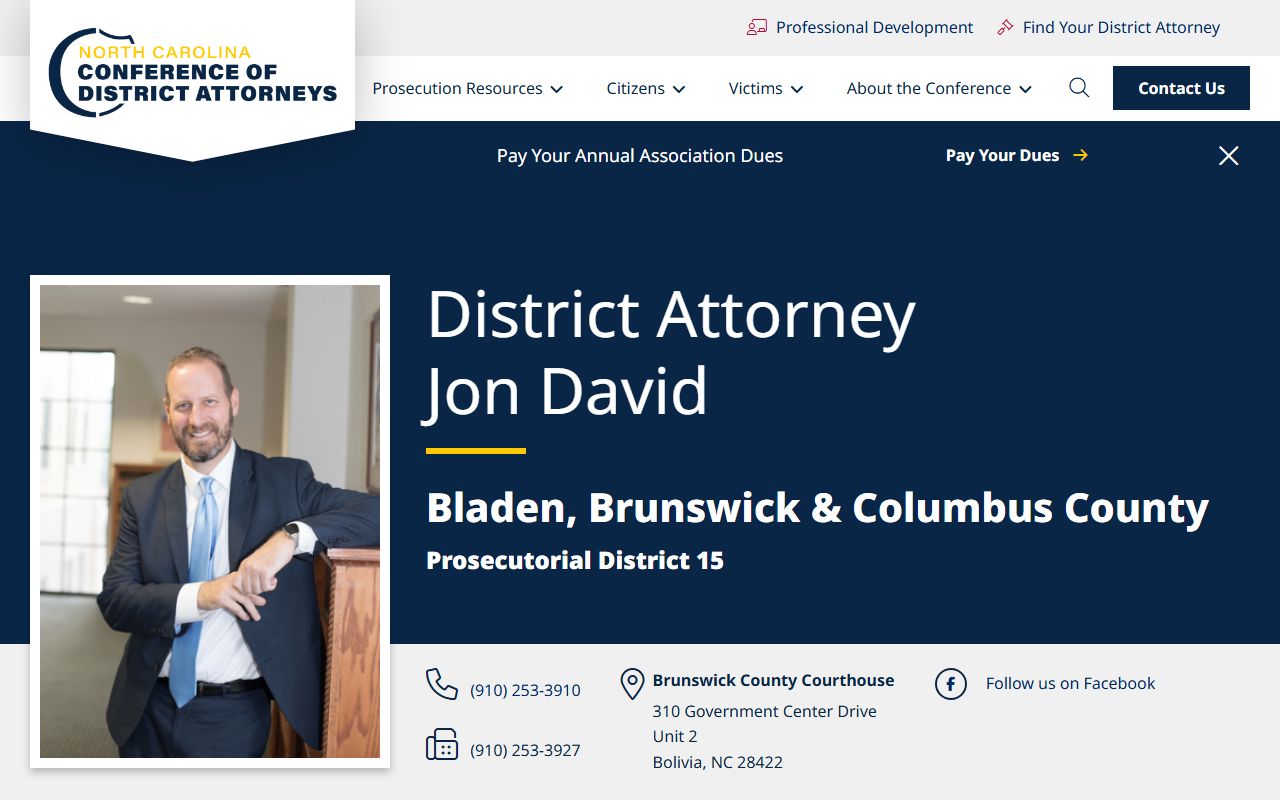
The District 15 source is relevant because prosecution decisions shape the criminal case file even though the Clerk of Superior Court maintains the court record.
The Find Your DA page explains the statewide district attorney role.
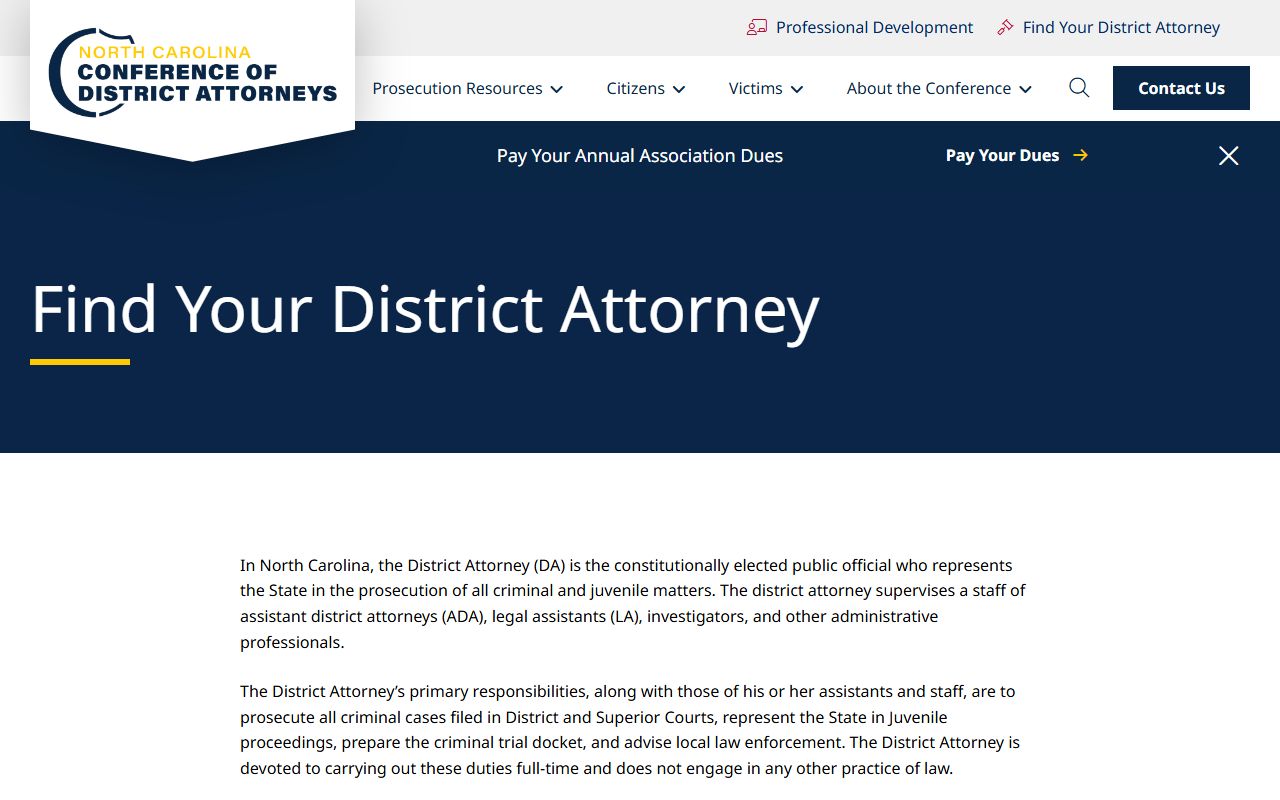
That role description supports the link between local criminal dockets, prosecutorial choices, and the final disposition shown in the case record.
What Columbus County Criminal Records Show
A Columbus County criminal court record should be read field by field. A charge is not the same as a conviction, and a docket event is not always the final result. The same file can contain allegations, appearances, continuances, plea negotiations, orders, dismissed counts, convictions, and sentencing entries. When a public Portal view looks incomplete, the clerk's file review is the route for the official case file.
| Field | What It Shows |
|---|---|
| Case Number | The unique court identifier used to connect Portal results, hearing searches, payments, and clerk records. |
| Defendant | The person charged in the criminal case, usually searched by last and first name. |
| Charges | The alleged offenses filed by citation, warrant, indictment, information, or other charging record. |
| Court Division | District Court for many misdemeanors and infractions, or Superior Court for felony and related matters. |
| Hearings | Scheduled appearances, continuances, motions, plea settings, trial sessions, or reviews. |
| Plea | The defendant's formal response or negotiated plea when entered and public. |
| Disposition | The outcome for a charge or case, such as guilty, dismissed, not guilty, or another court result. |
| Sentence | Punishment and terms after conviction, including probation, costs, restitution, fines, or other conditions. |
| Redactions | Juvenile, sealed, expunged, confidential, or protected personal information may be withheld. |
Columbus County Criminal Charges vs Convictions
Criminal court records can show both charges and convictions, but those terms do not mean the same thing. A charge is an accusation filed into court. A conviction is the result of a guilty plea, guilty verdict, or other finding that establishes guilt. The record may also show dismissal, not guilty, reduced charge, amended charge, deferred result, or other disposition. That distinction is critical when reading an older Columbus County case.
| Point | Charge | Conviction |
|---|---|---|
| Meaning | An accusation that starts or supports a criminal case. | A court outcome establishing guilt by plea or verdict. |
| Timing | Appears early in the prosecution. | Appears after plea, trial, or other final result. |
| Record value | Shows what was alleged or filed. | Shows the final guilty result and may lead to sentence terms. |
| Possible outcome | Can be amended, reduced, dismissed, or tried. | Can lead to sentencing, probation, fines, costs, or restitution. |
Note: A criminal case search should not treat every filed charge as a conviction without checking the disposition field.
Reading Columbus County Criminal Dispositions
Disposition is the outcome of a charge or case. Sentence is what follows a conviction. A Columbus County criminal court record may show a charge dismissed, a guilty plea entered, a not-guilty result, a sentence imposed, costs assessed, restitution ordered, probation added, or other terms. Payment entries may appear in Make Payments for eligible criminal court fees, fines, restitution, criminal attorney fees, probation and parole fees, and related obligations.
Some terms need care. Bond means security or conditions for release while a case is pending. Restitution means money ordered to compensate a victim. Probation is a supervised community sentence. Failure to appear means missing court and can lead to added process or consequences. A continuance is a postponed date. These terms can appear near each other in a case file, but each one describes a different court event.
Important: For employment, licensing, legal filing, or court use, verify the case through the Columbus County Clerk of Superior Court.
Sealed Columbus County Criminal Records
Not every criminal court record remains visible to the public. Juvenile cases, sealed matters, expunged records, and confidential information are restricted under North Carolina law. Public Portal results should not be assumed to include Social Security numbers, confidential juvenile details, sealed or expunged matters, or protected personal information. If a record seems missing, the reason may be legal restriction rather than a search error.
| Point | Sealed Record | Expunged Record |
|---|---|---|
| Public view | Withheld from public access by law or court order. | Cleared from public record when a valid expunction order applies. |
| Common basis | Confidentiality, safety, juvenile status, or court order. | Eligibility under a specific North Carolina expunction statute. |
| Effect | The record may still exist but is not open to ordinary public inspection. | The public record of covered arrests, charges, or convictions is cleared as directed. |
| How to verify | Ask the clerk about access rules or required court order. | Review the expunction order, statute, and clerk file route if legally permitted. |
G.S. 15A-145.5 covers certain nonviolent misdemeanor and felony expunction eligibility.
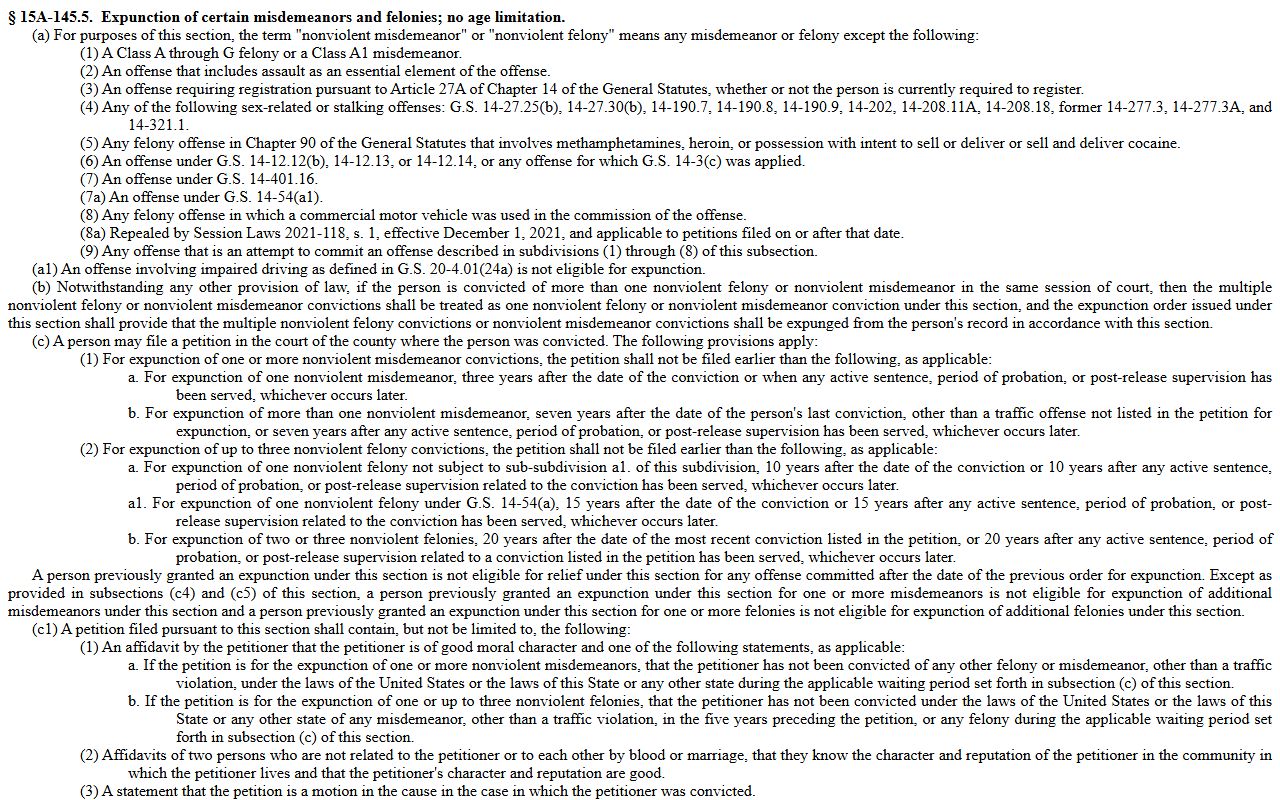
This statute is relevant to Columbus County criminal court records only when the exact offense, outcome, waiting period, and eligibility requirements fit.
G.S. 15A-146 covers expunction after dismissals and findings of not guilty.
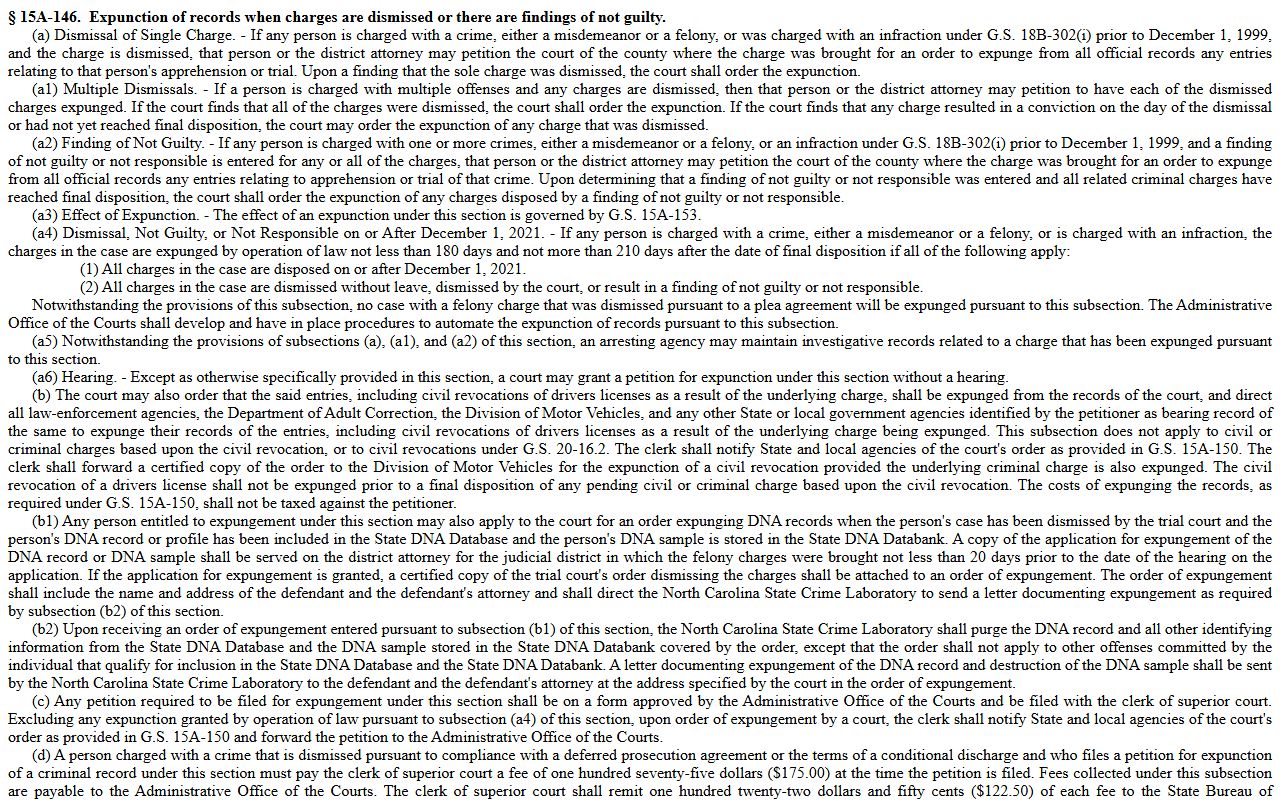
Dismissed and not-guilty records need separate review because a case can appear in public court records until a valid expunction order clears the public entry.
G.S. 15A-153 states the public-record effect of an expunction order.
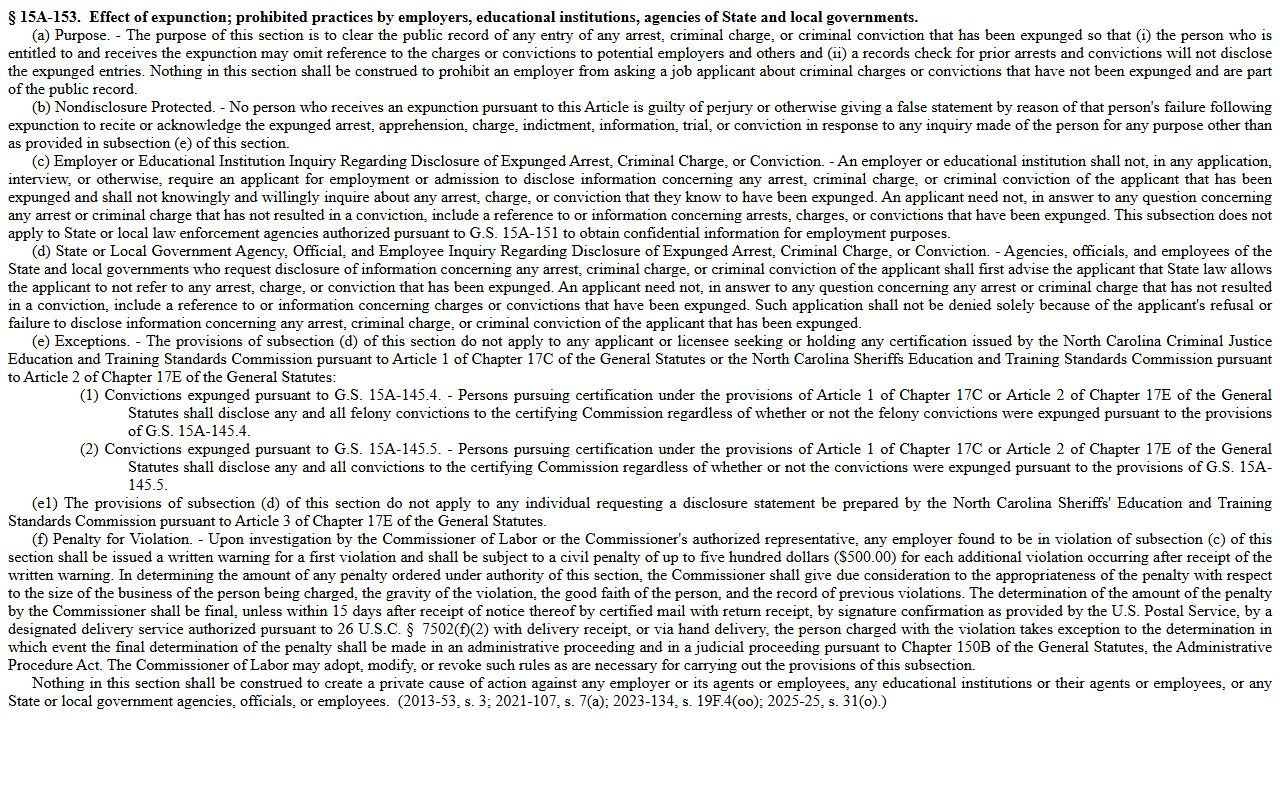
The effect statute is important because expunction changes public access, but it does not mean every internal government reference disappears for every purpose.
Public Access for Columbus County Criminal Records
North Carolina's public-record framework includes G.S. 132-1, which broadly defines public records, and the Chapter 132 provisions stating that returned warrants, indictments, criminal summonses, and certain orders are public court records unless sealed. Clerk recordkeeping is also governed by G.S. 7A-109. These laws support public access, but they do not override juvenile confidentiality, sealing, expunction, or protected personal information rules.
The practical access chain is Portal first, then the Columbus County Clerk of Superior Court for file review or copies. The courthouse is at 100 Courthouse Circle, Whiteville, NC 28472, and the clerk phone is (910) 641-4400. Criminal payment questions can involve the cashier window in the Criminal Division on the first floor for eligible costs, fines, and fees. Mail payments are payable to Columbus County Clerk of Superior Court and use the PO Box 1587 mailing address when eligible.
Restricted Columbus County Criminal Records
Juvenile criminal-related records are not treated like adult criminal court files. G.S. 7B-3000 governs juvenile court records maintained by the clerk, and G.S. 7B-2901 restricts abuse, neglect, and dependency records except as allowed by court order or statute. Mental health-related proceedings, sealed warrants, sealed indictments, and protected identifiers can also be withheld.
Custody status is separate. A person arrested in Columbus County may appear in sheriff custody tools before a final court disposition exists. Those custody or charge clues are not the full criminal case file. The case file and final court outcome are searched through Portal and the clerk, while the jail or inmate route belongs to the Sheriff's Office and related custody systems.