
Active Warrants in Columbus County
No official Columbus County Sheriff's Office web page publishing a searchable active-warrant list was located in the captured sources. That means a Columbus County warrant search should be treated as a fallback chain. Court records, returned warrants, criminal case entries, magistrate process, sheriff contact routes, and custody tools may each answer part of the question. A person searching for a current warrant should avoid relying on third-party warrant sites as the first source.
Under North Carolina public-records law, returned arrest and search warrants, indictments, criminal summonses, and nontestimonial identification orders may be public court records unless sealed. Before return or unsealing, a warrant may not be publicly visible. Once a Columbus County warrant becomes part of a criminal case, the North Carolina eCourts Portal and the Clerk of Superior Court become the main court-record routes.
The Columbus County Sheriff's Office homepage is the local law-enforcement starting point for non-emergency contact and app links.
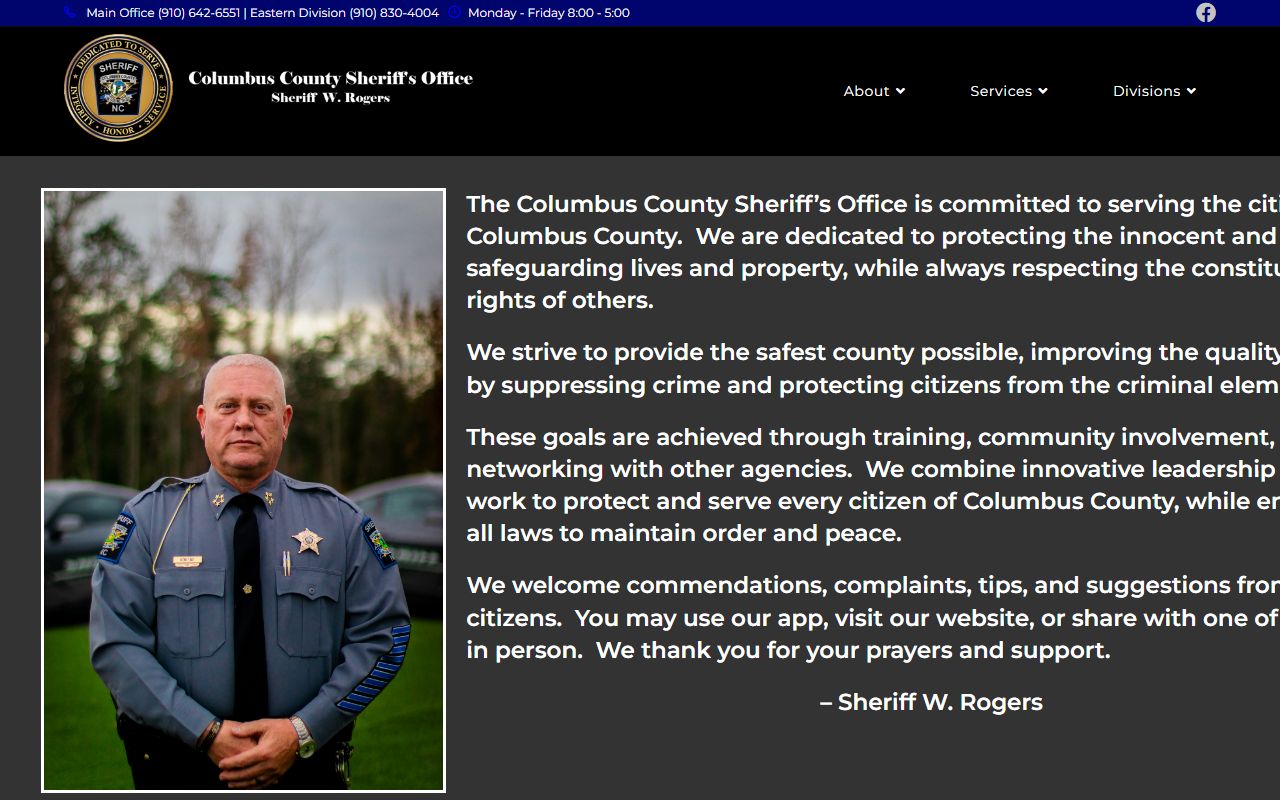
That sheriff route matters because the official research found app features and contact channels, but not a public active-warrant form on the website.
Columbus County Warrant Search Fallback Chain
Because there is no verified public warrant database for Columbus County, search channels should be used in order. Court records can show returned warrants and criminal cases. The clerk can confirm case-specific process and copies. Magistrates may be connected to initial appearances and warrants, while the Sheriff's Office can route law-enforcement records questions and tip information.
| Step | Channel | Use it for |
|---|---|---|
| 1 | Portal Smart Search and Search Hearings | Criminal case records, hearing dates, returned warrant-related cases, and charge status. |
| 2 | Clerk of Superior Court, (910) 641-4400 | Case-specific court process, copies, and public file review at Columbus County Courthouse. |
| 3 | Magistrates, (910) 641-4519 | Process and initial-appearance questions, without expecting legal advice or confidential warrant disclosure. |
| 4 | Sheriff's Office, (910) 642-6551 | Law-enforcement public information, non-emergency records routing, and current custody follow-up. |
| 5 | Sheriff app and In Custody route | Most Wanted, tips, inmate search, and custody checks after an arrest. |
For urgent safety matters, use 911. For legal advice, contact counsel. The District 15 Public Defender office may be relevant for eligible defendants once a criminal case exists, but it is not a warrant search office.
Types of Columbus County Warrants and Holds
Warrant terms are often used loosely. Columbus County records may refer to an arrest warrant, search warrant, order for arrest, failure-to-appear process, fugitive hold, or probation/parole hold. Each one has a different source and may become public at a different point.
- Arrest warrant authorizes taking a person into custody for a criminal charge.
- Bench warrant or order for arrest can follow a missed court date or failure to comply with a court order.
- Search warrant authorizes a search or seizure and may become public after return unless sealed.
- Fugitive or extradition hold can involve another county or state and may show in custody records after arrest.
- Probation or parole hold may appear in custody or state offender systems rather than a standard court warrant lookup.
Columbus County is in southeastern North Carolina and borders South Carolina, so out-of-county and out-of-state holds may be relevant when a person is arrested locally on another jurisdiction's process. A probation or parole hold can also point away from the county warrant route and toward state offender records. If the person is already in custody, the sheriff custody report or app may be the fastest way to learn whether a hold, bond issue, or listed charge is connected to the arrest.
Columbus County Warrant Search Fields
The research did not locate an official active-warrant web form for Columbus County. The practical search-field table is therefore based on the official court and custody routes that can surface warrant-related records. Portal uses name, record number, hearing search type, location, and advanced filters. The sheriff custody route may show current custody after a warrant arrest, but the public web page links to a custody report folder rather than an HTML warrant form.
| Field or route | Type | Required | Notes |
|---|---|---|---|
| Record number or case number | Text | Optional but precise | Use in Portal Smart Search if a warrant-related case number is known. |
| Last name, first name | Text | Primary name route | Portal accepts name searches and wildcard rules for party searches. |
| Location filter | Dropdown/filter | Recommended | Select Columbus County to narrow statewide North Carolina court results. |
| Search Hearings criteria | Dropdown plus text | Conditional | Search by case number, party name, attorney, judicial officer, or courtroom. |
| Custody report/app check | Report or app feature | Optional fallback | Use if the person may have been arrested on a warrant and booked locally. |
Columbus County Sheriff App for Warrants and Tips
The Columbus County Sheriff app is documented in both Apple and Google app stores. The app advertises inmate search, sex offenders, Most Wanted, emergency alerts, local weather, crime tips, and social media features. The research does not show a website active-warrant form, so the app is a high-value route for Most Wanted and tip activity. It should not be used for emergencies; the app listing says to call 911 for emergencies.
The Google Play listing for the Columbus County Sheriff app documents the Most Wanted and tip features.
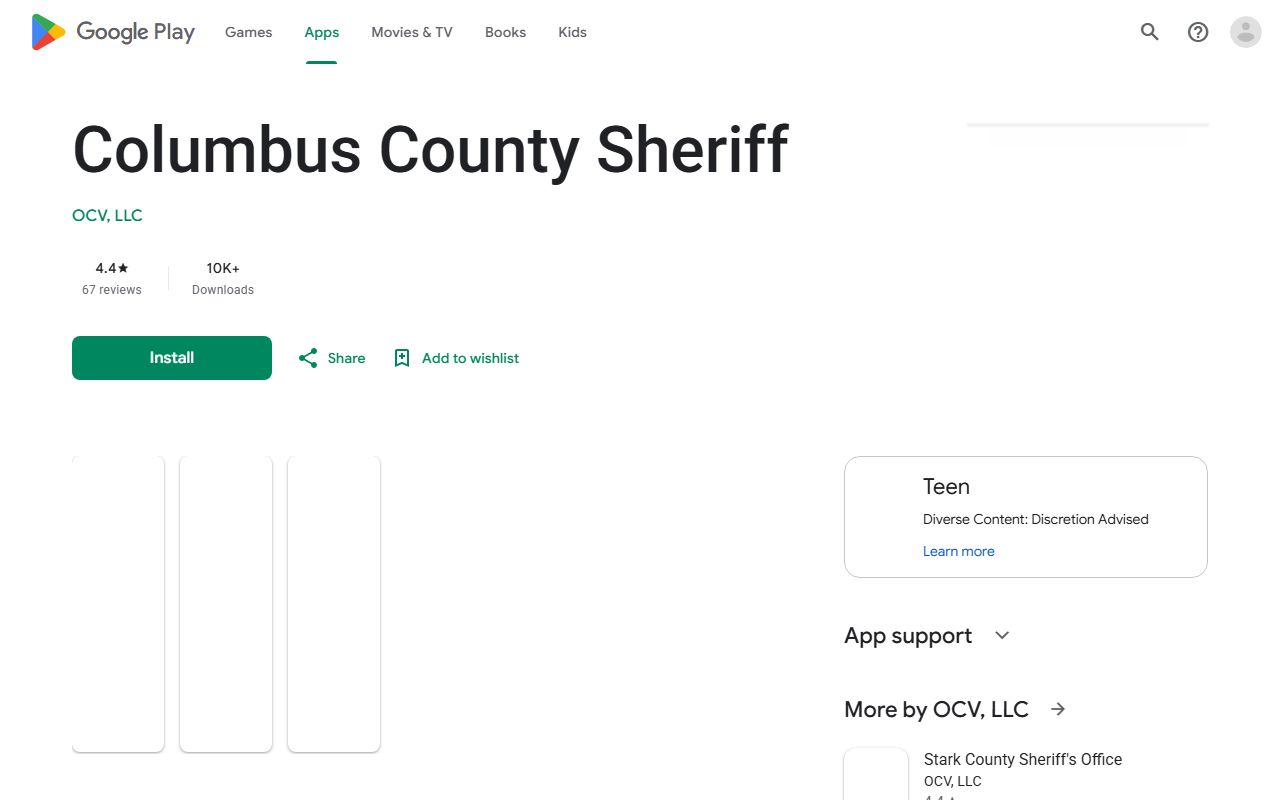
That app listing supports using the mobile app as a warrant-related fallback when the website lacks an active-warrant list.
The Apple App Store listing for the Columbus County Sheriff app is the corresponding iOS route.
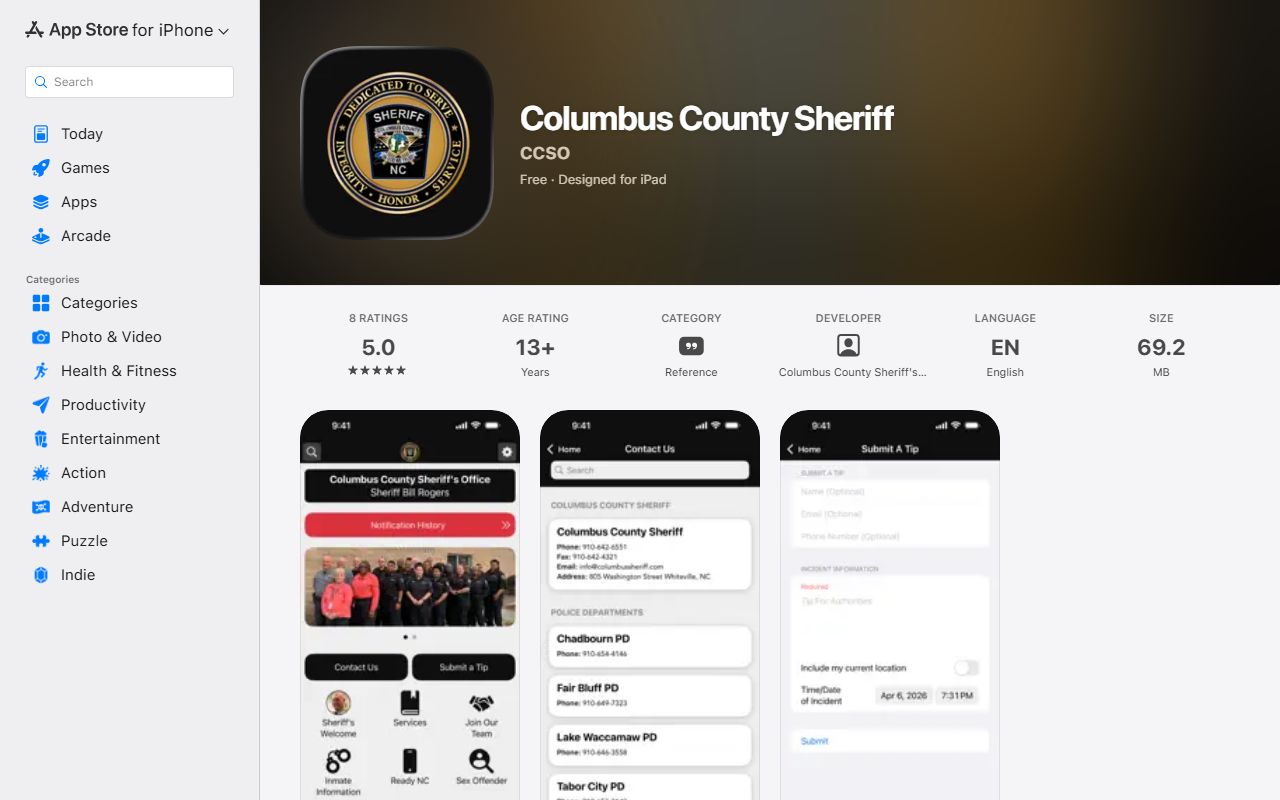
iPhone users can use that route for the same sheriff-published app features, including non-emergency tips and mobile law-enforcement information.
What a Columbus County Warrant Record Shows
No sample active-warrant database result was captured from an official Columbus County warrant system. The official-law and court context still gives a reliable field inventory for warrant-related court records after return or case filing. A returned warrant or warrant-related criminal case can connect the warrant to the defendant, charge, issuing official, return status, bond conditions, hearing date, and later disposition.
| Field | What It Shows |
|---|---|
| Case or record number | The court identifier used in Portal or the Clerk of Superior Court file. |
| Defendant name | The person named in the warrant-related criminal case. |
| Charge or offense | The alleged offense tied to the warrant, summons, indictment, or order. |
| Issuing court or official | The judicial source connected to the warrant or court process. |
| Warrant type or return status | Whether the process is an arrest warrant, search warrant, order, or returned court document if visible. |
| Bond or conditions | Release conditions if the person was arrested and bond information is public in the record. |
| Hearing date or disposition | The next court date or final outcome if the warrant has converted into a criminal case. |
Sealed warrants, juvenile warrants, sealed indictments, and confidential investigative material should not be expected in a public search result.
Columbus County Warrant Contacts
Official contact routes help verify where a warrant-related record sits. The Sheriff's Office is the law-enforcement contact. The Clerk of Superior Court is the court-file contact. Magistrates connect to warrants, process, and initial appearances, but they do not provide legal advice.
Columbus County Sheriff's Office
817 Washington Street
Whiteville, NC
(910) 642-6551
Monday-Friday, 8:00 a.m.-5:00 p.m.
Clerk of Superior Court
100 Courthouse Circle
Whiteville, NC 28472
(910) 641-4400
Weekdays, 8:30 a.m.-5:00 p.m.
Columbus County Magistrates
Columbus County court system
Whiteville, NC
(910) 641-4519
Process and initial-appearance contact route
The Sheriff division page identifies Sheriff W. Rogers and lists the sheriff contact route.
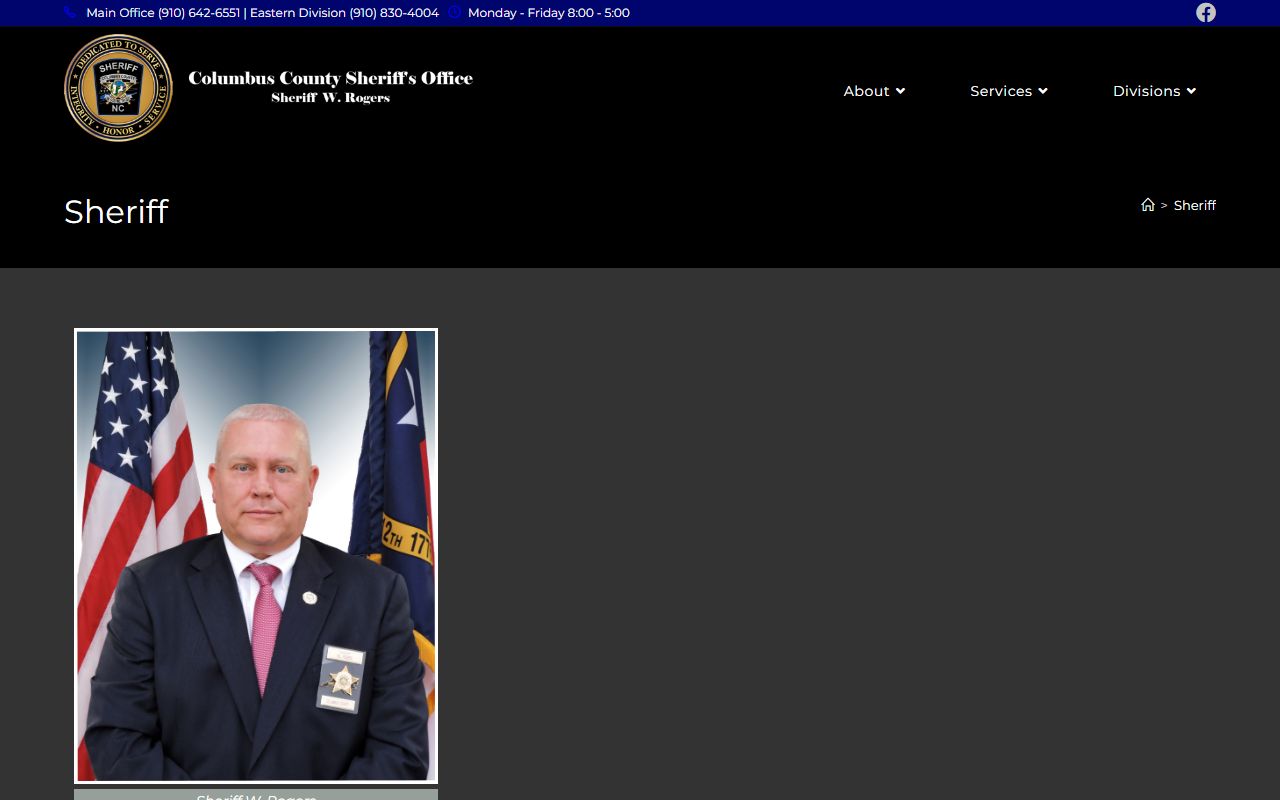
That source supports the sheriff office details used when a warrant question is about law-enforcement records rather than a filed court case.
The Sheriff contact page lists law-enforcement contacts and related agency numbers.
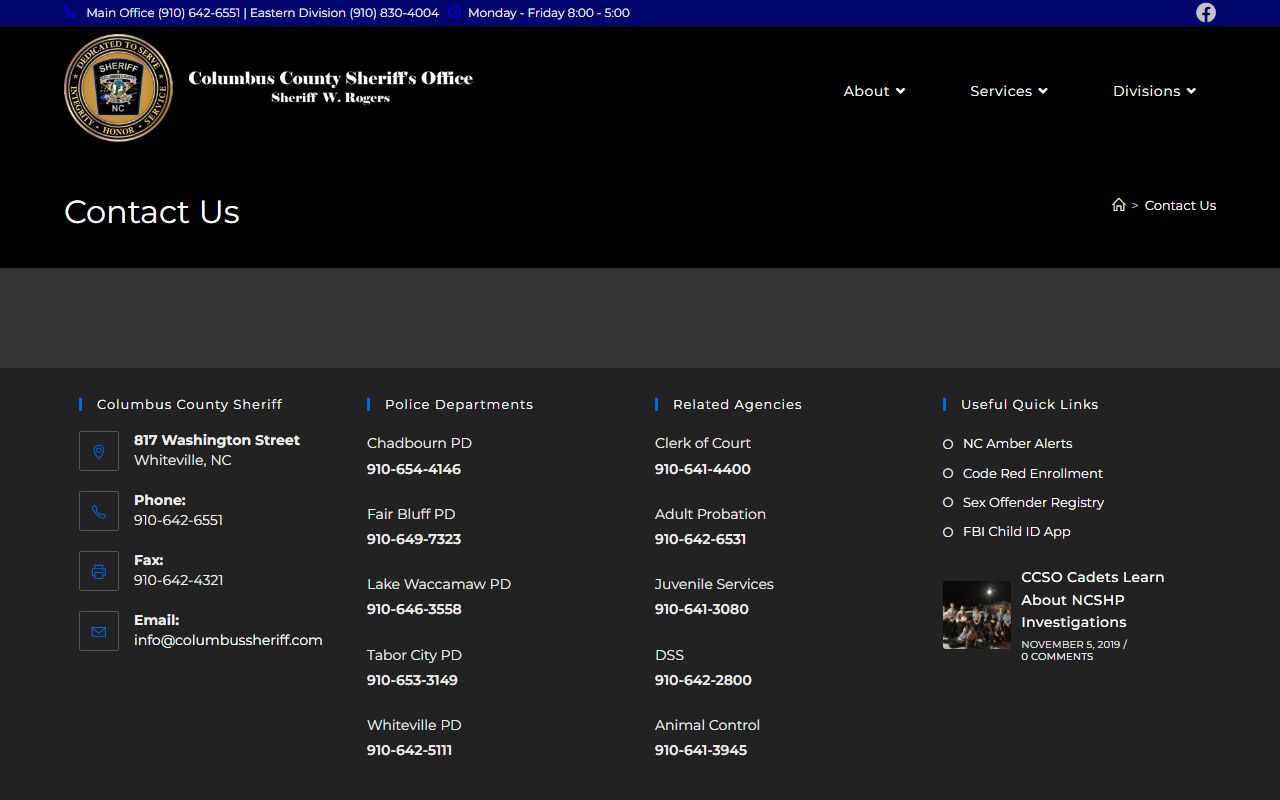
Those local police contacts matter when the incident or report started with Chadbourn, Fair Bluff, Lake Waccamaw, Tabor City, or Whiteville police.
What to Do If You Have a Columbus County Warrant
Start with the official fallback chain rather than an aggregator site. Search Portal for a Columbus County criminal case or hearing. Call or visit the Clerk of Superior Court for case-specific court process. If a person may already be in custody, check the sheriff's In Custody route or app. For legal advice, contact counsel before going to the Sheriff's Office or courthouse.
Municipal police agencies may be relevant when the event began in Chadbourn, Fair Bluff, Lake Waccamaw, Tabor City, or Whiteville. Those agencies may hold incident or report information, but the court case still routes into the North Carolina court system. Use the charging agency for police-report questions and the clerk for the filed court record.
- Do not ignore a missed court date, order for arrest, or suspected warrant.
- Search Portal by name and Columbus County location if the case may already be filed.
- Call the clerk for case status and public file-copy questions.
- Contact a lawyer or appointed counsel route if criminal exposure is possible.
- Use sheriff non-emergency contact or the app tip feature only for appropriate law-enforcement communication.
Important: A warrant search can affect arrest, bond, and court dates, so legal advice should come from counsel.
Restricted Columbus County Warrant Records
Some warrant records are not available to the public. Sealed warrants and sealed indictments may remain hidden until unsealed or until an arrest occurs. Juvenile warrant-related records are governed by Chapter 7B confidentiality rules. Federal warrants are separate from Columbus County court records and may involve the U.S. Marshals Service or federal court systems rather than the local sheriff's public channels.
The Columbus County Sheriff's FAQ page is a general sheriff information source for jail, reports, visitation, and related public questions.
That FAQ context helps separate sheriff public-information questions from court-file questions that must go to Portal or the Clerk of Superior Court.