
Columbus County Arrest Records and Court Charges
Arrest records in Columbus County begin with the agency that made the arrest and the detention process that follows. The Columbus County Sheriff's Office is the local source for jail custody routes, while municipal police agencies in Chadbourn, Fair Bluff, Lake Waccamaw, Tabor City, and Whiteville may hold incident or report information for arrests they initiated. A custody entry is not the same as the formal court charge record. It is a first view of the person's current jail status, booking path, and listed charge information if the person is still in county custody.
The court charge record starts when a criminal matter enters the North Carolina General Court of Justice. Columbus County criminal matters route through District Court or Superior Court, with the Clerk of Superior Court maintaining the court file. The District Attorney for Prosecutorial District 15 represents the State in criminal and juvenile prosecutions and prepares the criminal trial docket. For the custody side, use the Columbus County inmate records page. For the plea, disposition, sentence, and costs after charges move through court, use the Columbus County criminal court records page.
The state law source for public records is G.S. 132-1. That statute defines public records broadly, but criminal charge access still depends on whether the record is a returned warrant, filed case, sealed matter, juvenile matter, expunged matter, or active investigative file.
The North Carolina public-records definition is one source captured for Columbus County arrest records.
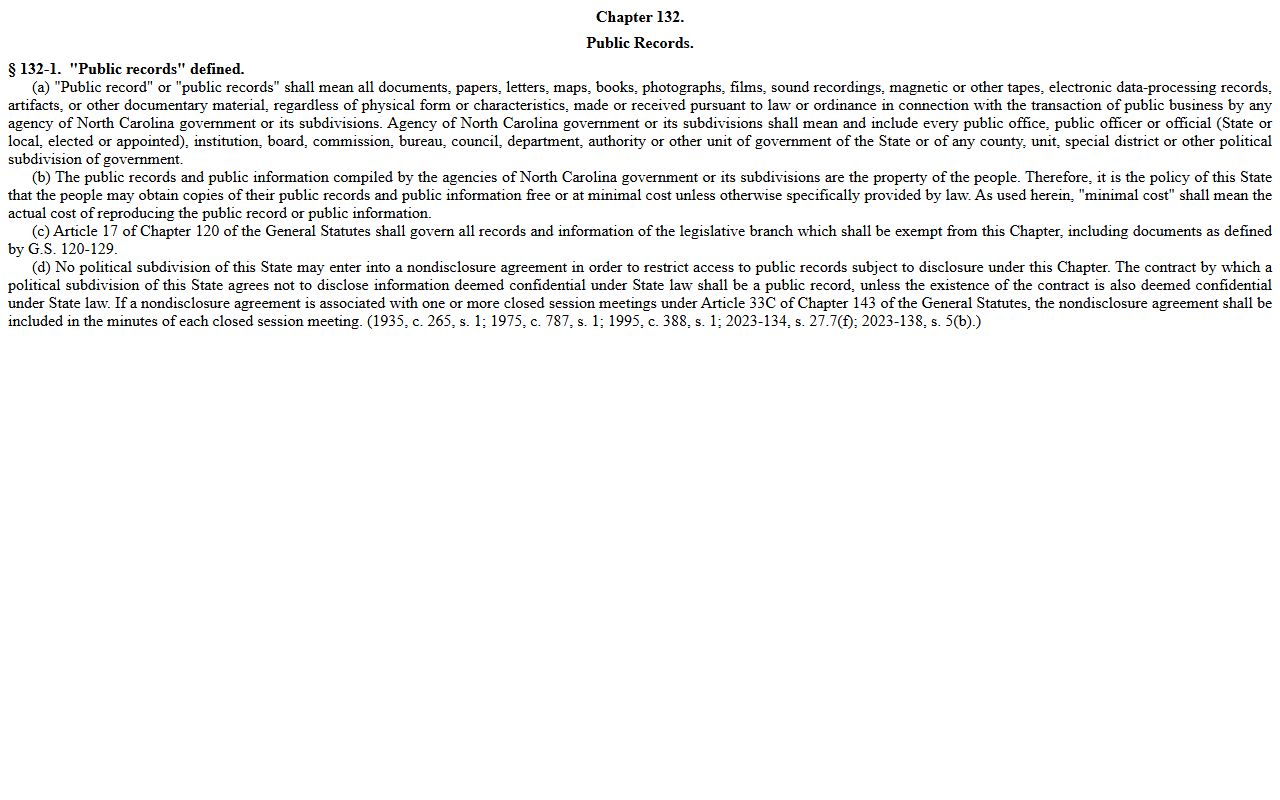
That public-records rule is the starting point, but court charge access also depends on court filing status, confidentiality laws, and whether a warrant or indictment has been returned.
How to Find Columbus County Arrest Records and Charges
The main court route is the North Carolina eCourts Portal, which is linked from the NCAOC Columbus County location page. Smart Search accepts a record number or a name in last, first format and allows advanced filters for Columbus County, case type, case status, file date, party data, SO number, and booking number. That portal is best for charges that have become court cases. Older files, complete file review, certified copies, and background-check needs still route to the Columbus County Clerk of Superior Court at the courthouse.
- Search Portal Smart Search by defendant name or record number, then filter by Columbus County when advanced filters are needed.
- Open the matching criminal case and read the charge list, court location, case status, hearing entries, and disposition fields if available.
- Check Search Hearings for upcoming Columbus County court dates by party name, case number, attorney, judge, or courtroom.
- Use the sheriff's In Custody route or mobile app when the person may still be booked in the Columbus County Detention Center.
- Contact the Clerk of Superior Court when an official copy, a full file, or a background-check record is needed.
Portal is not a complete criminal-history background check. NCAOC says individuals performing background checks should use the county clerk's office rather than relying only on Portal. State prison, probation, and parole status are separate from county court charges and are searched through the North Carolina Department of Adult Correction offender tools.
How Columbus County Charges Get Filed After an Arrest
Charges after arrest can begin with an arrest warrant, citation, magistrate process, indictment, criminal summons, or other charging paper. Columbus County uses the same North Carolina trial-court structure as the rest of the state: District Court handles misdemeanors, infractions, traffic, and first-level criminal matters, while Superior Court handles felonies and later felony proceedings. Magistrates may be involved in initial appearances, warrants, process, and bond decisions.
| Charging paper | Where it fits | Columbus County record path |
|---|---|---|
| Criminal complaint, citation, or summons | Starts many misdemeanor, infraction, or first-appearance matters. | Filed into District Court records and searched through Portal or the Clerk of Superior Court. |
| Arrest warrant or order for arrest | Authorizes arrest or custody based on a charge, missed court, or court process. | Returned warrants become public court records unless sealed under Chapter 132. |
| Indictment | Formal felony charging document from a grand jury. | Superior Court criminal record, with case events maintained by the clerk. |
The North Carolina Chapter 132 public-records provisions address returned arrest and search warrants, indictments, criminal summonses, and nontestimonial identification orders.
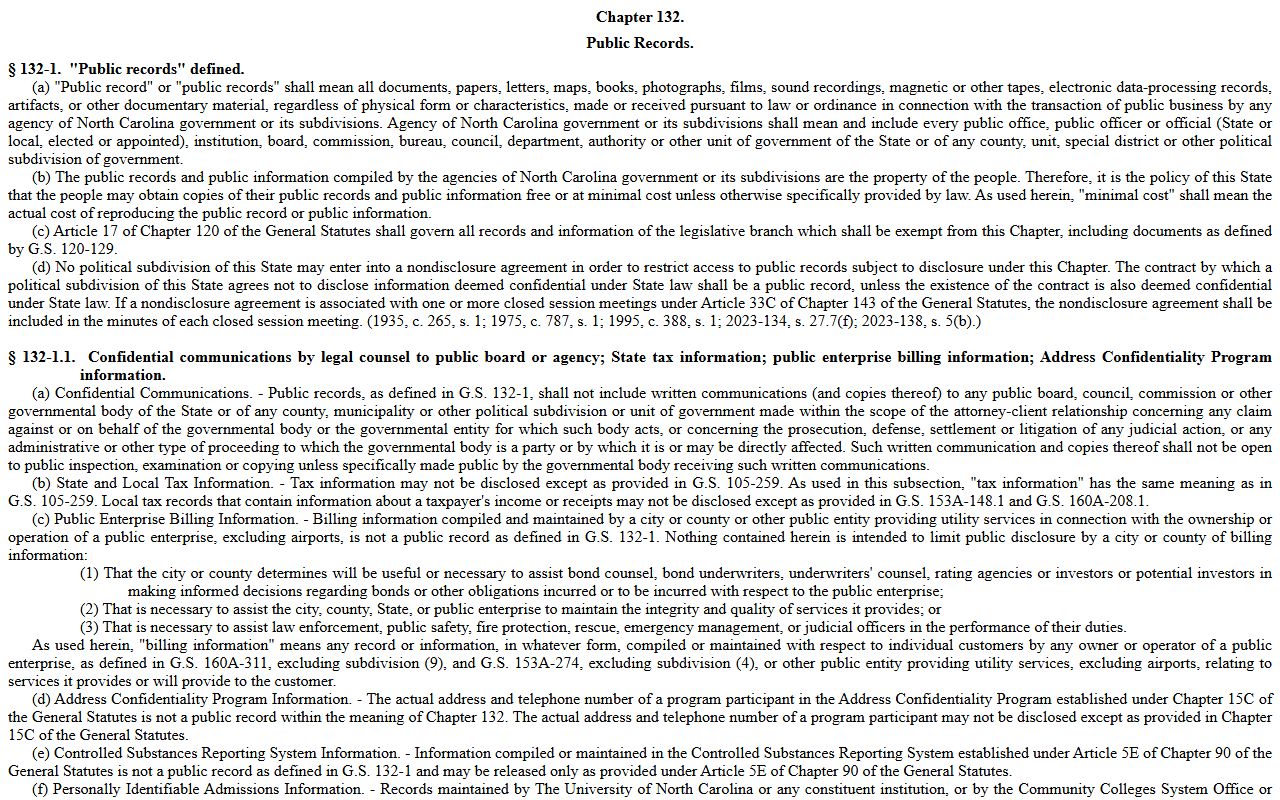
That source matters because a warrant may not be visible while sealed or unreturned, then become part of the public court record after return unless a court order limits access.
Columbus County Charge Status and What It Means
A Columbus County charge record is not fixed at booking. The charge list can change as the prosecutor reviews facts, a grand jury acts, a plea is reached, a trial occurs, or the court dismisses a count. Portal and clerk records may show case status and charge status, but a complete reading often requires the case file and the latest court event.
| Status or event | What it means in a charge record | What to check next |
|---|---|---|
| Pending | The charge is still open and has not reached final disposition. | Search Hearings for the next Columbus County court date. |
| Amended or reduced | The original charge was changed, often to a different offense level or statute. | Compare the original charge list with the latest docket entry. |
| Dismissed | The charge was ended by the court or prosecution, subject to the wording of the order. | Review whether dismissal was with or without prejudice if the file says so. |
| Plea, verdict, or disposition | The case reached an outcome on one or more charges. | Use the full criminal case record for sentence, costs, and probation terms. |
Note: A single arrest can create more than one charge, and each charge may have a different status or outcome.
Columbus County Charges vs. Convictions
A charge is an accusation in a court file. A conviction is a final finding or plea that establishes guilt. Columbus County arrest records may list charges soon after booking, but that does not mean the person was convicted. The difference is central when reading court charges after arrest, especially for employment, housing, licensing, or personal research.
| Record point | Charge | Conviction |
|---|---|---|
| Stage | Filed after arrest, citation, warrant, summons, indictment, or prosecutor action. | Entered after guilty plea, verdict, or other qualifying adjudication. |
| Proof level | Accusation or probable-cause stage, depending on the paper. | Final criminal outcome reflected in the court file. |
| Where checked | Portal, custody report/app, clerk file, or warrant return record. | Criminal case disposition, judgment, sentence, and probation entries. |
| Why it matters | May be amended, reduced, dismissed, or superseded. | May carry fines, costs, restitution, probation, custody, or collateral effects. |
Sheriff Court Services and the Arrest-to-Court Path
The sheriff's Court Services division supports the local court process after arrest. The Columbus County Sheriff's Court Services page states that court services cover District Court, Superior Court, Small Claims Court, Civil Court, and Child Support Court. It also describes courtroom security, bailiff duties, metal detector screening, x-ray checks, and removal of pocket metal before entry.
The Sheriff Court Services source helps connect Columbus County arrest records to courthouse processing.
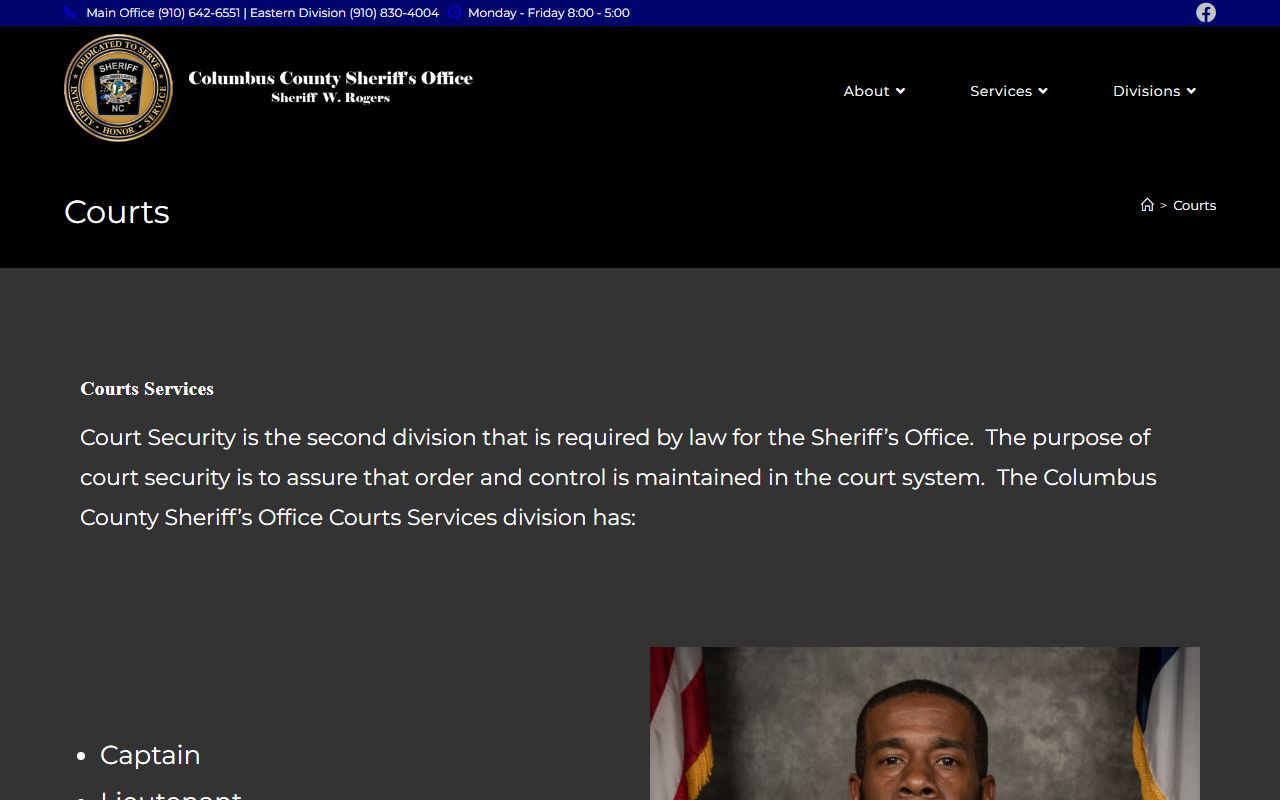
Those courthouse-security details are useful because a person with an arrest-related court date will normally pass through court screening before appearing in District or Superior Court.
Statewide Charge and Criminal History Routes
Columbus County charges that remain at the county court level are searched through Portal and the clerk. State custody, probation, and parole records are different. The North Carolina Department of Adult Correction offender search covers state prison offenders, probationers, and parolees, with historical information back to 1972, but it does not include county jail custody. NC SAVAN/VINELink can provide custody-status notifications for county jail inmates, state prisoners, probationers, parolees, and registered sex offenders.
For complete court files, certified copies, or authoritative background-check records, the local route remains the Clerk of Superior Court. The clerk maintains District and Superior Court case files under the state court system. Public terminals at clerk offices can be used for civil, special proceeding, and estates information, and criminal files should be verified through the court that holds the case.
Restricted Columbus County Arrest Records and Charge Records
Not every arrest or charge is public in the same way. Juvenile delinquency and undisciplined records are maintained under G.S. 7B-3000. Abuse, neglect, and dependency records are withheld from public inspection except as allowed by court order or statute under G.S. 7B-2901. Sealed warrants, sealed indictments, ongoing investigative material, and protected personal identifiers may also be unavailable in public views.
The juvenile court records statute is relevant when Columbus County arrest records involve minors.
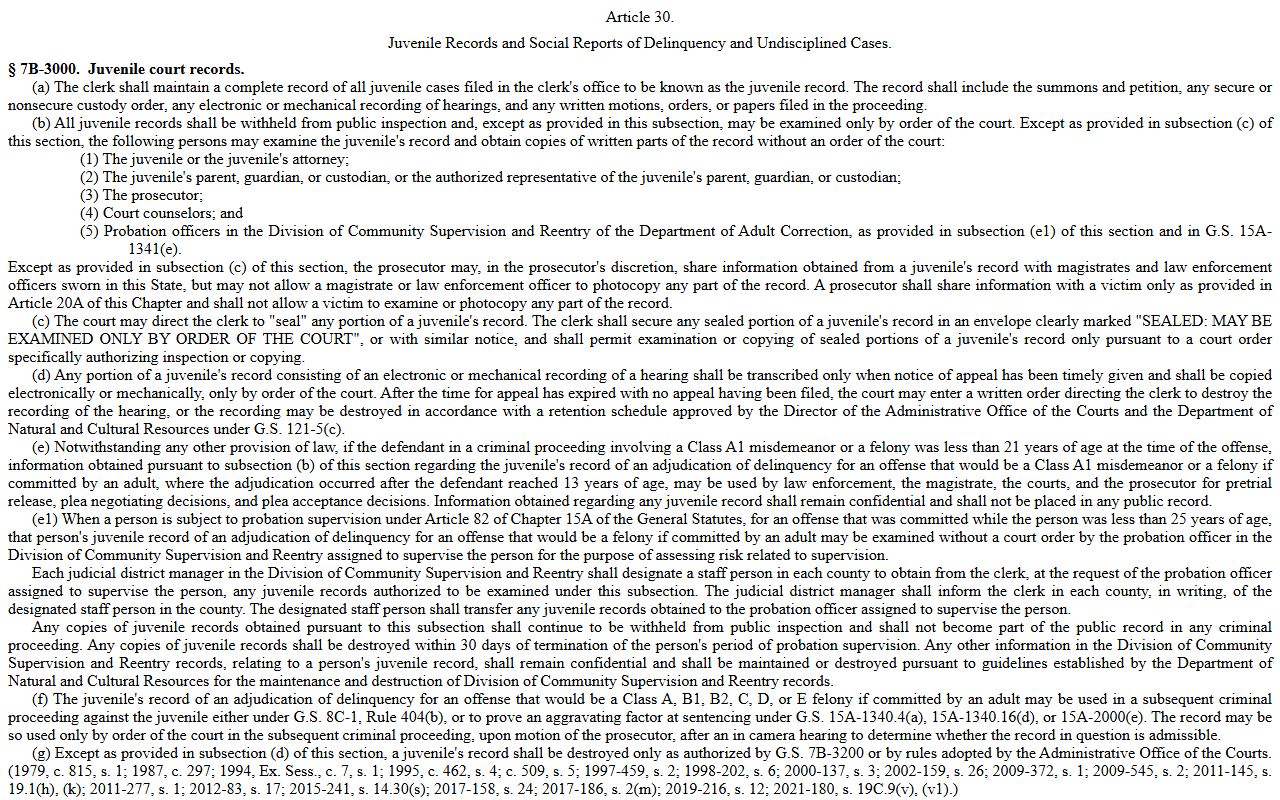
Juvenile court files are handled under special rules, so an adult-style name search may not show records that exist in restricted juvenile systems.
The juvenile abuse, neglect, and dependency confidentiality statute adds another access limit.
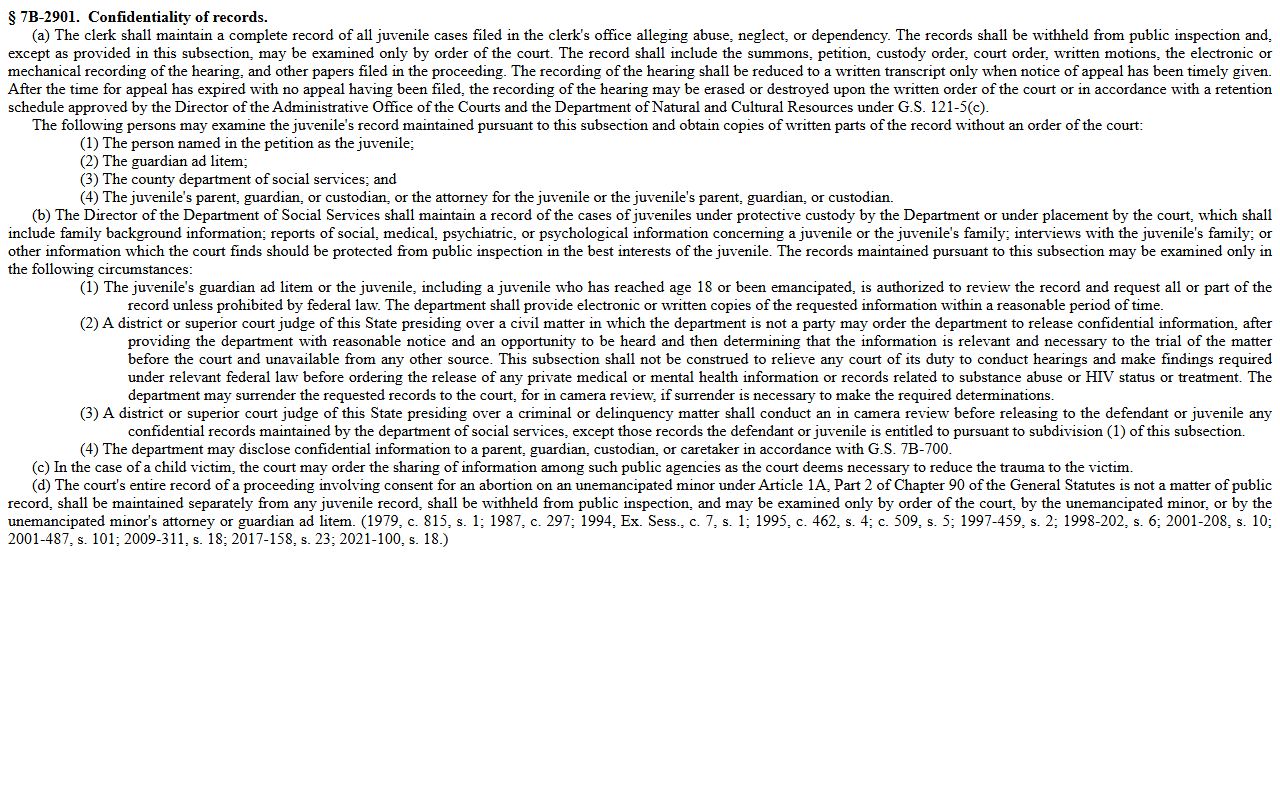
That rule explains why child-sensitive case information may be withheld even when other court records are open for public review.
Sealed vs. Expunged Columbus County Charge Records
Sealing and expunction are different. A sealed record is withheld from public access by law or court order. An expunction is a court process that clears eligible public criminal records. Columbus County expunction petitions are filed through the Clerk of Superior Court using North Carolina statutes and AOC forms. Eligibility depends on the exact charge, disposition, offense class, prior record, age category, waiting period, and the statute used.
| Access limit | Sealed record | Expunged record |
|---|---|---|
| Public view | Hidden from public search because of law or court order. | Cleared from public record if a valid expunction order applies. |
| Common reason | Juvenile, confidential, sealed warrant, protected case, or court order. | Dismissal, not-guilty result, or eligible nonviolent conviction under statute. |
| North Carolina source | Chapter 7B and court sealing rules may apply. | G.S. 15A-145.5, G.S. 15A-146, and G.S. 15A-153 are common sources. |
| Local action | Ask the Clerk of Superior Court what public access is allowed. | File the correct petition in the proper county and await a court order. |
Important: A dismissed Columbus County charge can still appear until a valid expunction order clears the public record.